
- Home
- Products
- Groundwork Materials: Piles, Pipes & More
- Stormwater Retention, Detention & Infiltration Systems
Underground Stormwater Systems for Site-Specific Needs
Looking for a Trusted Stormwater Systems Supplier? Read On.
Keep More of Your Site Usable
You can manage stormwater below grade while keeping valuable surface area available for parking, access, landscaping, and other project needs.
Get a System That Fits Your Site
You get a retention, detention, or infiltration solution selected around your actual runoff volume, soil conditions, available depth, loading, and site layout.
Avoid Costly Project Changes Later
You address storage, discharge, loading, and layout requirements early, helping reduce redesigns, site conflicts, and unpleasant surprises during permitting or construction.
The Challenge: Why Stormwater Management Becomes a Project Constraint
Stormwater requirements can shape a project long before construction begins. Available land, grading, runoff volume, discharge limits, soil conditions, and local drainage requirements all affect how much water must be managed and where the system can be placed.
The challenge becomes greater on sites where every square foot matters. Surface ponds and other above-ground solutions can consume valuable development area, while underground systems must fit around utilities, foundations, traffic areas, structural loads, and limited installation depth.
When stormwater planning happens too late, the consequences can extend beyond drainage. Developers may face layout changes, additional excavation, coordination conflicts, permitting delays, or the need to redesign parts of the site.
Early selection of the right retention, detention, or infiltration approach helps integrate stormwater management into the overall site design and prevents it from driving late project changes.
Our Solution: Stormwater Systems Matched to Your Project
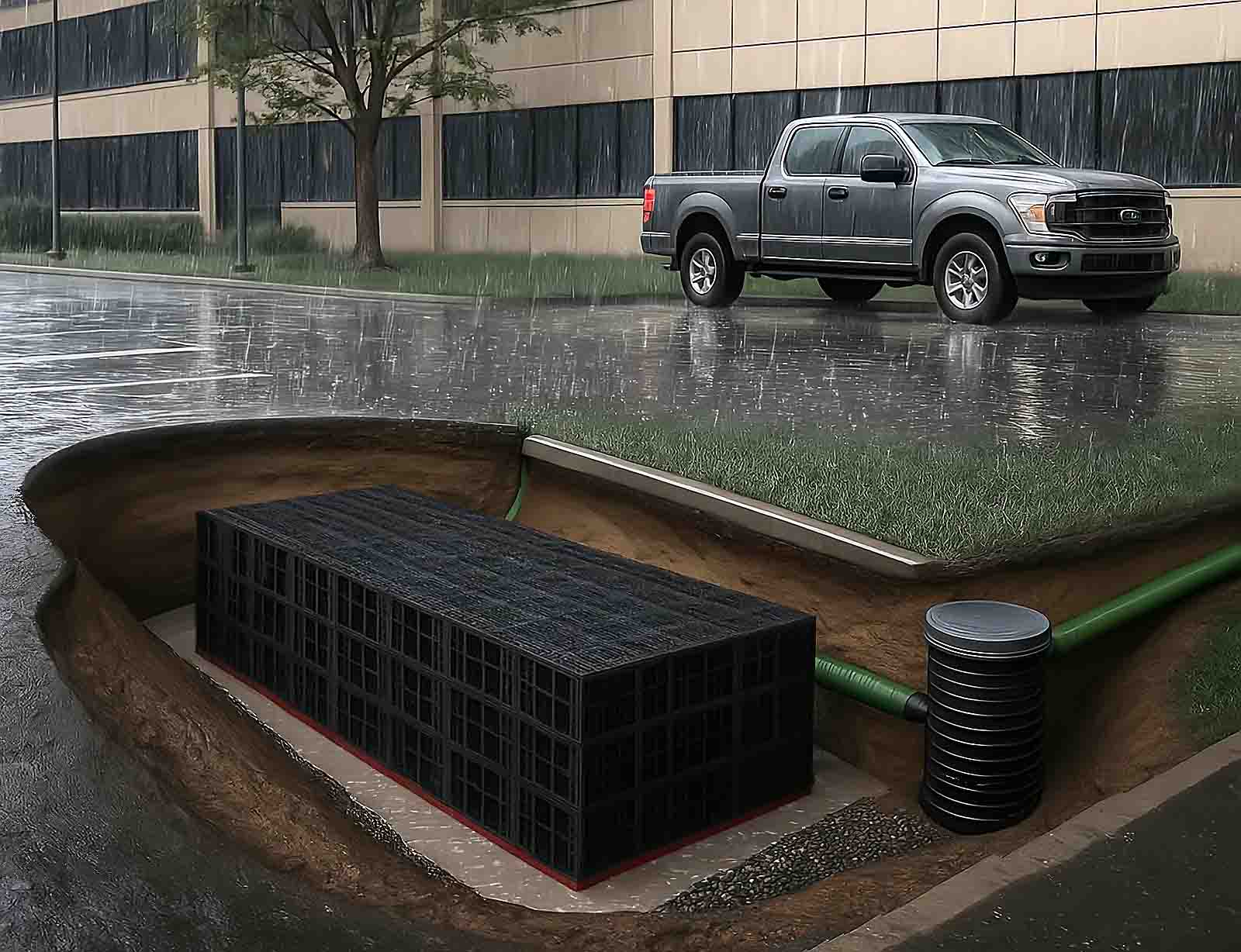
At A Priori Source, we supply underground stormwater systems configured around the conditions that shape each project, including required storage volume, available depth, soil conditions, structural loading, discharge requirements, and site layout.
The project may call for retention, detention, infiltration, or a combination of these functions. Our role is to match the system type and configuration to the site while preserving valuable surface area and coordinating with the broader construction plan.
We source modular and project-specific systems for multifamily, commercial, residential, and infrastructure applications. Each solution is selected around the technical requirements of the project, with attention to long-term durability, installation efficiency, and the documentation needed for design and project review.
Stormwater System Types We Offer
Water Retention Systems |
Water Detention Systems |
| Retention systems capture and store stormwater for extended periods. Stored water can also be reused for applications such as irrigation or other approved non-potable uses. Underground configurations help preserve usable surface area while providing storage capacity matched to the project. They can be incorporated into developments where water conservation, reuse, or long-term storage forms part of the overall stormwater strategy. Learn more about planning and designing underground stormwater detention systems for constrained sites. | Detention systems temporarily store stormwater and release it at a controlled rate after a rainfall event. They are commonly used where peak runoff must be reduced before discharge into downstream drainage infrastructure. Underground detention can be configured beneath parking areas, roads, landscaped zones, or other active site areas where appropriate, helping developers manage runoff without dedicating large surface areas to open storage. |
Infiltration Systems |
Modular Underground Storage Systems |
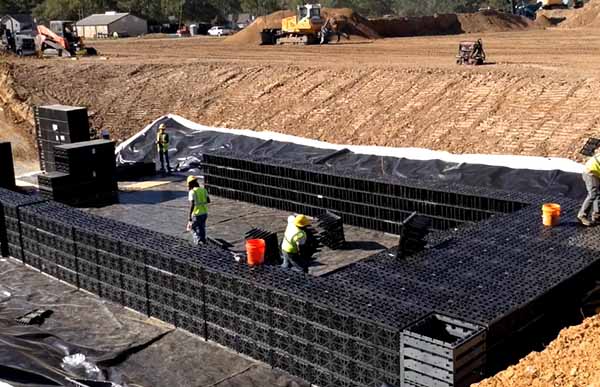
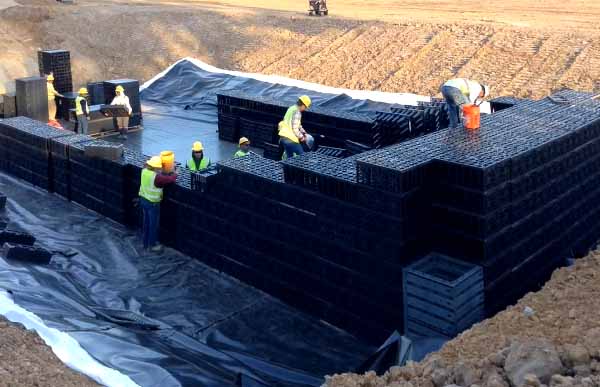
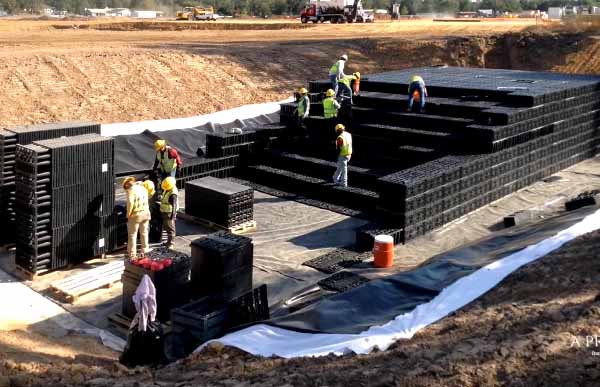
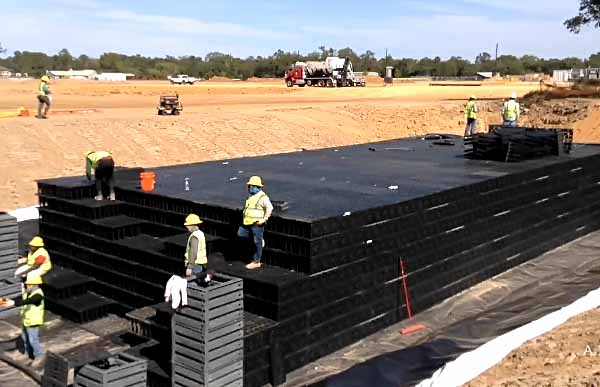
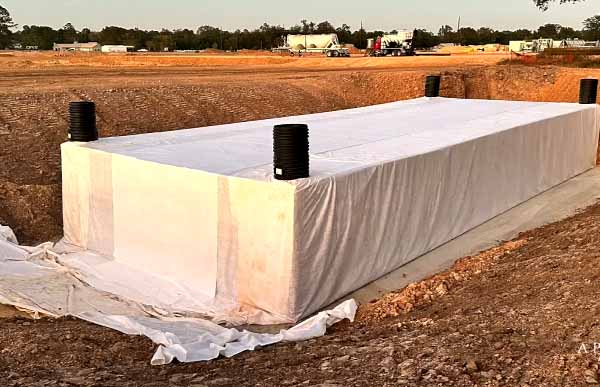
| Infiltration systems temporarily hold stormwater and allow it to enter the surrounding soil where site conditions permit. Chambers and modular underground systems can provide substantial storage while reducing the footprint required for conventional aggregate-based approaches. Suitability depends on factors such as soil permeability, groundwater conditions, setbacks, water quality requirements, and local regulations. | Modular underground storage systems use interconnected structural units to create storage volumes that can be adapted to available space, depth, and loading requirements. The same modular platform can support retention, detention, or infiltration functions based on the project design. Their flexible geometry makes them useful for sites with irregular layouts, limited excavation depth, or active surfaces that must remain available for other uses. |
Benefits of Underground Stormwater Systems
Maximize Usable Land
Underground stormwater systems help preserve valuable surface area for parking, access roads, landscaping, buildings, and other site uses while providing the storage capacity required by the project.
Flexible, Scalable Configuration
Modular systems can be configured around available footprint, installation depth, required storage volume, and site geometry. This flexibility makes them suitable for both new construction and retrofit applications.
Support Design and Permitting Requirements
Stormwater systems can be configured around project-specific storage, discharge, infiltration, and flow-control requirements. Proper system selection and technical documentation help engineers coordinate the design with applicable local and project requirements.
Designed for Structural Loading
Underground systems can be selected for installation beneath parking areas, roadways, landscaped zones, and other active surfaces. Structural configuration and load capacity are matched to the intended application, with rated loading requirements verified for the specific system selected.
Rainwater Reuse Potential
Retention systems can be configured to store stormwater for approved non-potable uses such as irrigation. Where appropriate, rainwater reuse can help reduce potable water demand and support broader project sustainability goals.
Planned Access and Maintenance
Underground stormwater systems can incorporate inspection points, access structures, sediment management, and other maintenance provisions appropriate to the selected system. Proper access planning helps support reliable long-term operation.
Reduced Surface and Infrastructure Impact
By managing stormwater within the project site, underground retention, detention, and infiltration systems can help reduce peak runoff, preserve usable land, and reduce pressure on downstream drainage infrastructure. Depending on the system type and site conditions, they may also support infiltration, water reuse, or other stormwater management objectives.
Compliance & Standards
At A Priori Source, we understand that stormwater systems must fit both the technical requirements of the project and the regulatory framework that applies to the site. Our systems are selected and configured with project-specific requirements in mind, including NPDES permitting considerations where applicable, state and local stormwater regulations, drainage criteria, and relevant ASTM material and performance standards.
Requirements vary by jurisdiction, site conditions, and system function. Storage volume, allowable discharge rates, infiltration suitability, soil and groundwater conditions, structural loading, and access for inspection and maintenance may all influence the final configuration. We provide system specifications and technical documentation to support coordination with civil engineers, site planners, and project review teams.
FAQ
How do I know whether my project needs retention, detention, or infiltration?
Can I install a stormwater system under a parking lot or roadway?
When does underground stormwater storage make sense?
Can infiltration work if my soil drains poorly or groundwater is high?
Can your system work with a drainage plan my civil engineer has already designed?
What information do you need to select the right system?
Why Choose A Priori Source for Stormwater Systems
A Priori Source coordinates stormwater system selection, technical requirements, procurement, and delivery for project teams. We help project teams identify the right system, coordinate technical requirements, and move from selection through procurement with fewer disconnects between design, supply, and construction.
We work with a global network of manufacturers, allowing us to compare retention, detention, infiltration, and modular storage options without being limited to a single product line. Systems are selected around project-specific requirements such as storage volume, available footprint, installation depth, structural loading, and site conditions.
Our team coordinates with developers, civil engineers, architects, and contractors to provide available technical data, product documentation, and installation guidance while keeping communication and sourcing organized through a single point of contact.
Project-Specific System Selection
We match the stormwater system to the project using storage needs, footprint, depth, loading, site constraints, and system function as the main selection criteria. Storage needs, footprint, depth, loading, site constraints, and system function all guide the selection process.
Global Sourcing Without Brand Lock-In
Access to multiple manufacturers gives us flexibility to compare technologies, configurations, and supply options based on the project instead of limiting the solution to one brand or system type.
Technical Coordination and Documentation
We provide available specifications, drawings, loading data, installation information, and manufacturer documentation to support coordination with civil engineers, contractors, and project review teams.
Supply and Logistics Coordination
From manufacturer communication through delivery planning, we help coordinate procurement and logistics so the selected system arrives aligned with the project schedule, quantities, and site requirements.
Trusted Support for Stormwater System Selection
A Priori Source supports both new stormwater systems and existing drainage designs that need to be adapted to site constraints. We connect system selection, technical coordination, sourcing, and delivery in one process.
Contact us right now to discuss your site conditions, storage requirements, available footprint, loading, or project schedule. We’ll help identify suitable system options and provide the technical information needed for the next step.