
- Home
- Products
- Interior Finishes
- Interior Door Systems for Project Interiors
Interior Doors Specified for Residential, Multifamily, and Commercial Projects
Looking for a Trusted interior doors Supplier? Read On.
Project approved interior door solutions
We supply interior doors selected and configured to match approved project designs, specifications, and layouts. Doors are aligned with agreed finishes, dimensions, and use cases, so what gets delivered matches what was approved and documented.
Reliable sourcing and delivery for construction
We manage interior door sourcing to support real construction schedules. This includes coordinating quantities, configurations, and delivery timing so doors arrive when needed and remain consistent across units, phases, or buildings.
Ongoing support and warranty coordination
We remain involved after delivery, supporting questions during installation and addressing replacement or warranty related needs. This helps keep interior door issues from escalating into delays or unresolved site problems.
Common Challenges in Specifying Doors for Complex Interiors
Interior doors are a critical but often underestimated component of interior finishes. In residential, multifamily, and commercial projects, door selections must align with wall construction, trim details, hardware preparation, and overall design intent. When these elements are considered separately, coordination issues tend to emerge during later project stages.
Another common challenge is navigating functional and regulatory requirements. Interior doors may need to meet specific criteria related to accessibility, fire performance, durability, or circulation, depending on the project type and local jurisdiction. Without a clear framework at the specification stage, teams can encounter uncertainty during review, approval, or installation.
Consistency across a project also presents a recurring concern. Variations in door construction, finishes, or lead times can disrupt door schedules and affect visual continuity across spaces. In projects with multiple unit types or repeated interior layouts, these inconsistencies become harder to manage and more costly to resolve over time.
Interior Door Systems Aligned with Project Requirements
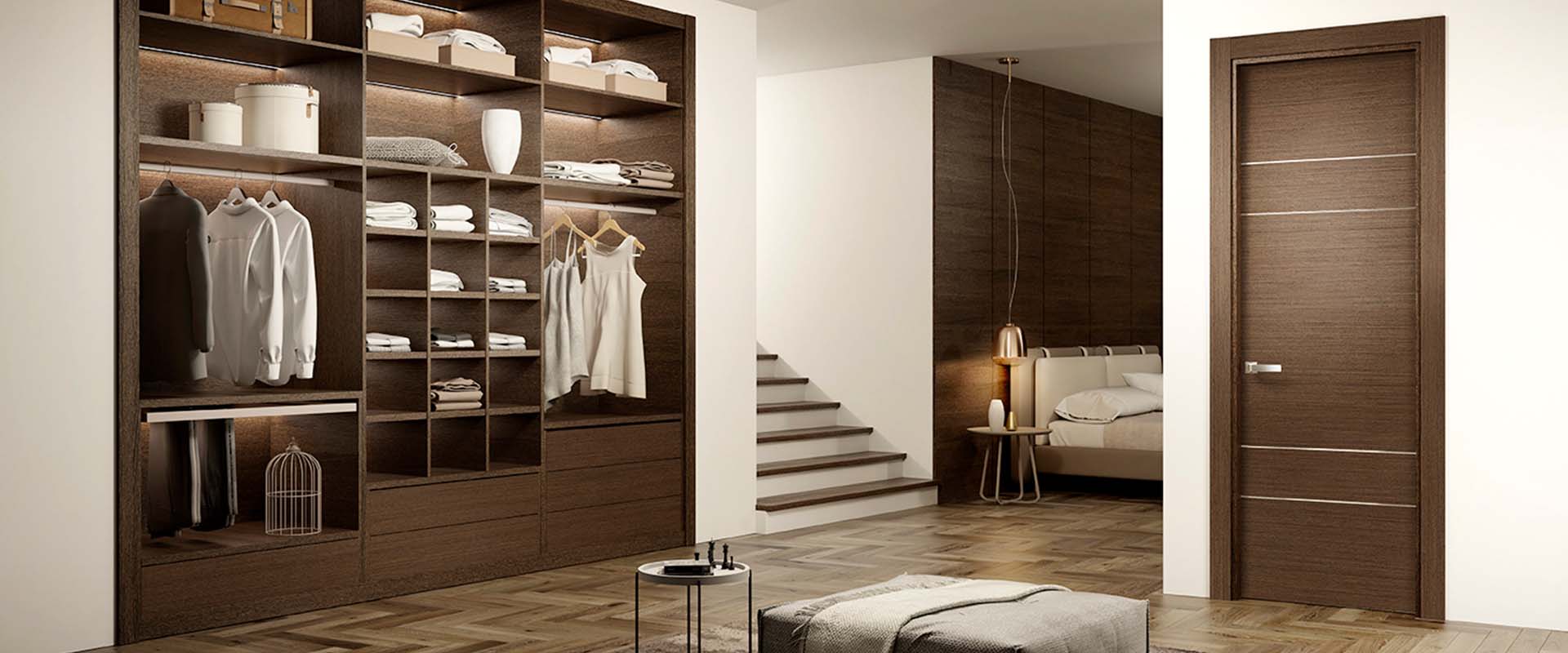
A Priori Source provides interior door systems designed to integrate seamlessly into residential and commercial projects. Our approach starts with understanding how doors function within the broader interior finish scope, including wall assemblies, trim details, hardware preparation, and circulation requirements. This allows door selections to support both the technical and spatial needs of the project.
Rather than offering isolated door products, we focus on system level coordination. Interior doors are specified with attention to construction type, material performance, finish consistency, and compatibility with surrounding interior elements. This approach supports clear door schedules, simplifies coordination across trades, and helps maintain consistency throughout the project lifecycle.
Our interior door solutions are applicable across a wide range of environments, including private residences, multifamily developments, and commercial interiors. Each system is configured to support durability, code awareness, and long term usability, while aligning with the overall interior design direction. The result is a coordinated interior door strategy that contributes to predictable execution and cohesive interior outcomes.
Door System Types and Configuration Options
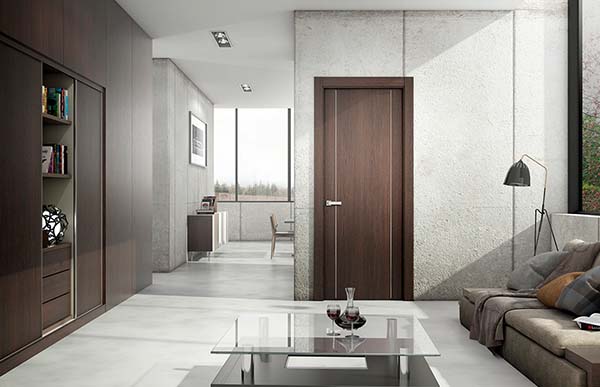
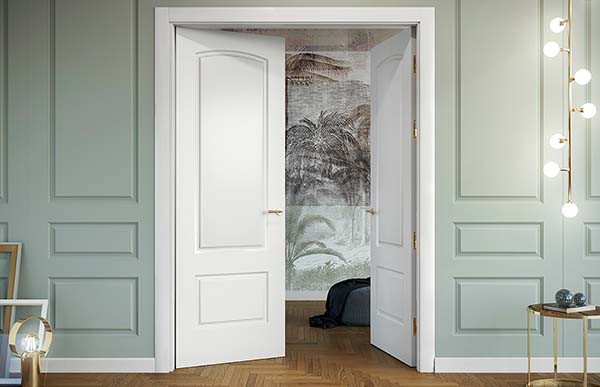
Architectural Interior Door Systems |
Sliding and Pocket Door Configurations |
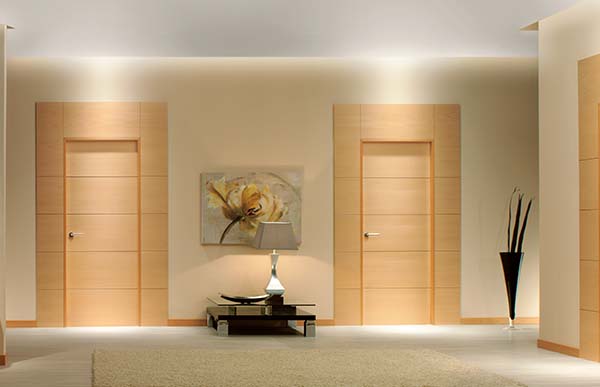
Architectural interior door systems are specified to support spatial flow, privacy, and long term performance across residential, multifamily, and commercial interiors. These systems are designed to integrate consistently with wall assemblies, interior finishes, and hardware requirements while maintaining a clear design intent throughout the project.
|
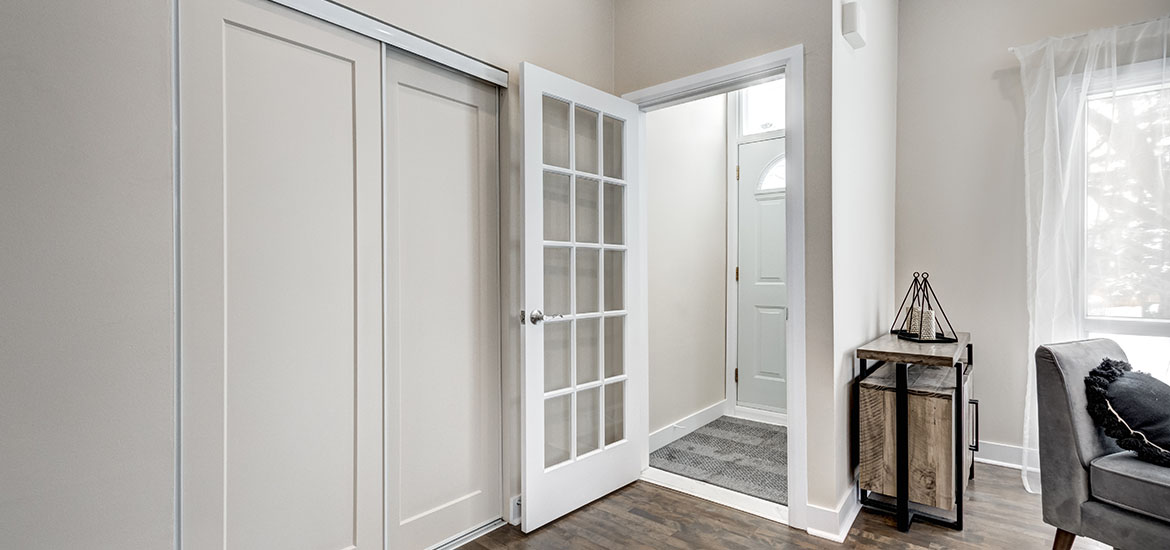
Sliding and pocket door configurations are used to manage space efficiently while maintaining functional separation between interior areas. These systems are specified as complete assemblies, accounting for framing conditions, door panels, hardware preparation, and long term operability.
|
Door Construction, Cores, and Surface Finishes |
Door and Trim Coordination with Hardware Preparation |
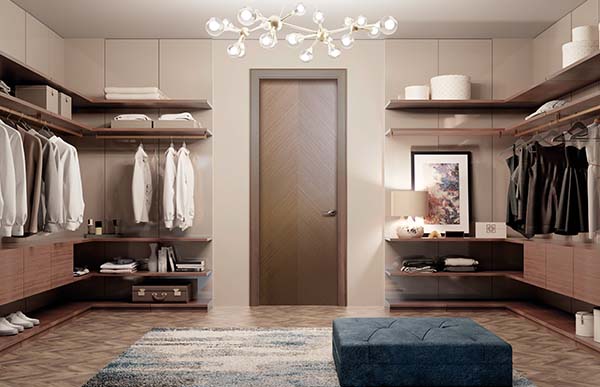
Interior door construction and material selection influence durability, acoustic performance, and overall appearance. Door systems are specified based on project use, expected traffic, and compatibility with interior finish strategies to ensure consistent performance across multiple openings.
|
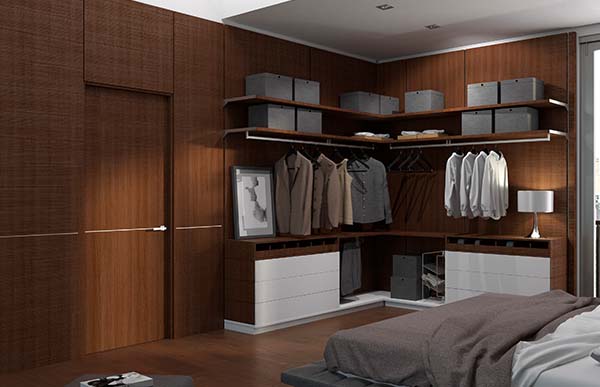
Interior door performance depends on proper coordination between door panels, frames, trim, and hardware. These systems are specified with attention to preparation details, installation conditions, and interface points to support predictable execution on site.
|
Key Benefits of Coordinated Interior Door Systems
Reduced Coordination Issues Across Doors, Frames, and Hardware
Interior door systems perform more predictably when door leaves, frames, trim, and hardware preparation are coordinated as a single solution. This reduces late stage conflicts related to clearances, handing, and installation conditions that often emerge during site work.
More Predictable Installation Through Predefined Door Configurations
Interior projects benefit from door systems that are clearly defined by opening type, jamb conditions, and hardware requirements at the specification stage. This supports consistent installation workflows across residential, multifamily, and commercial interiors.
Consistent Finish and Design Continuity Across Interior Spaces
Coordinated interior door construction and surface finish options help maintain visual consistency across units, corridors, and shared areas. This supports long term aesthetic alignment while accommodating multiple door types within the same project.
Code Aware Interior Door Systems for Commercial and Multifamily Use
Interior doors used in regulated environments often need to align with accessibility guidelines, circulation requirements, and fire performance criteria. A code aware approach to interior door systems supports smoother reviews and helps reduce late specification revisions.
Compliance & Standards
Interior door systems used in U.S. projects are subject to a range of building codes and regulatory requirements that vary by project type and local jurisdiction. These requirements influence door dimensions, operation, performance characteristics, and installation conditions. As a result, interior doors must be considered within the broader context of code compliance rather than as standalone products.
For residential and multifamily interiors, interior doors may need to align with accessibility provisions established under the Fair Housing Act and the ADA Standards for Accessible Design. These standards typically address minimum clear opening widths, ease of operation, and hardware selection to support safe and independent use. Requirements can differ depending on unit type, occupancy classification, and whether doors fall along accessible routes.
Commercial and public interiors introduce additional considerations related to durability, circulation, egress, and life safety. In certain applications, interior doors are required to function as part of fire rated door assemblies, with performance evaluated in relation to surrounding wall construction and overall fire protection strategies. Door systems in these environments must also support frequent use and long term reliability.
Interior door systems provided through A Priori Source are selected and configured to support compliance with commonly adopted U.S. building codes, including International Building Code requirements and applicable accessibility standards. Final compliance is always determined in coordination with the authority having jurisdiction, and door systems are specified to support clear documentation, review, and approval processes throughout the project lifecycle.
FAQ
How are interior door systems specified for residential and commercial projects?
Can interior doors be coordinated with trim, frames, and hardware as a single package?
How do interior door systems address code and accessibility requirements?
Are interior door systems suitable for both custom and repeated project layouts?
Why Choose A Priori Source for Interior Door Systems
A Priori Source works with interior door systems as part of a broader project delivery framework, not as isolated products. Our role is to support architects, designers, and development teams in navigating specification complexity, coordinating multiple requirements, and maintaining clarity from early design stages through procurement and installation. This approach is especially valuable in projects where interior doors must align with finishes, schedules, and regulatory constraints.
We operate at the intersection of design intent, technical requirements, and supply coordination. By managing interior door systems within the context of the overall interior scope, we help teams reduce fragmentation and avoid common breakdowns between specification and execution. This allows interior doors to be integrated more smoothly into construction workflows and project timelines.
Our focus is on long term project reliability rather than short term product selection. Interior door systems are approached as part of a controlled process that supports documentation accuracy, predictable lead times, and informed decision making. This enables project teams to move forward with greater confidence as designs evolve and projects scale.
Single Point of Coordination Across Interior Door Scope
A Priori Source serves as a central partner for interior door systems, helping align specifications, schedules, and technical details across multiple stakeholders and disciplines.
Specification Support That Anticipates Project Conditions
Interior doors are reviewed and coordinated with real construction and use conditions in mind, supporting clearer documentation and fewer downstream revisions.
Supply Chain Management Focused on Project Timelines
We manage sourcing and coordination to support predictable lead times and consistent delivery across residential, multifamily, and commercial interiors.
Experience Working Within Regulated and Multi Phase Projects
Our process is suited to projects with code considerations, repeated layouts, and phased execution, where consistency and control are essential.
Moving Forward with Confidence in Interior Door Specification
Interior door systems play a defining role in how interior spaces function, perform, and age over time. When doors are specified with attention to coordination, compliance, and long term use, they contribute to smoother execution and more predictable project outcomes across residential, multifamily, and commercial interiors.
A Priori Source supports project teams in navigating the complexity of interior door specification by providing clarity, structure, and continuity throughout the process. Our focus remains on aligning interior door systems with broader interior strategies, construction realities, and regulatory considerations.
If you are planning a project that requires coordinated interior door systems, our team is available to support early specification discussions and project level coordination. Engaging at the right stage helps establish a stronger foundation for execution and long term performance.