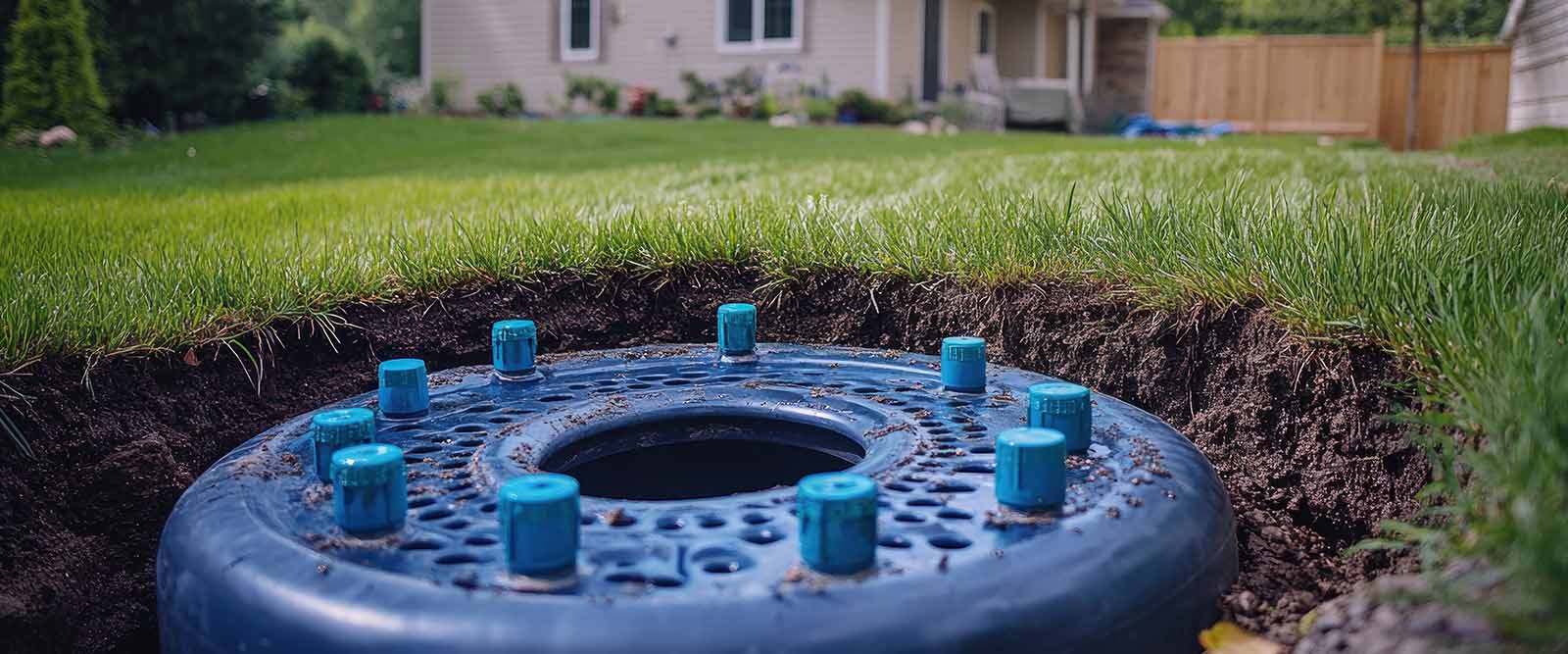
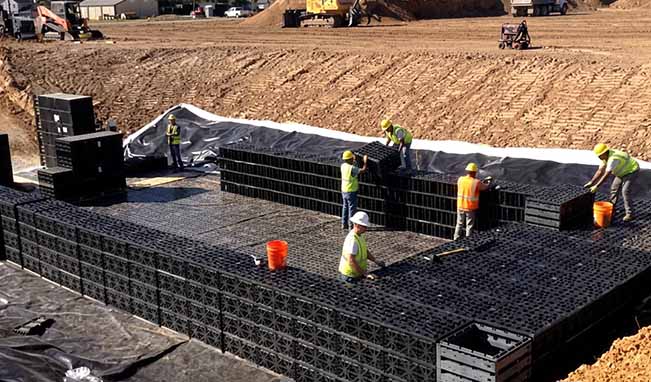
Stormwater decisions can affect a development well beyond the drainage plan. Parking counts, building footprints, access roads, landscaping, utilities, and future expansion all compete for the same site area.
By the time stormwater storage requirements are finalized, much of the site layout may already be established. A surface pond can take usable land out of the plan, while an underground system may increase construction cost but preserve the area above for other uses.
The difference between stormwater retention and detention can affect land use, discharge strategy, maintenance responsibilities, long-term ownership costs, and the flexibility of the property after construction.
This article compares these practical differences and explains the factors project teams should evaluate before selecting an approach.
Why Stormwater Infrastructure Exists in the First Place
Before development, rainfall is absorbed, stored, and slowed by soil and vegetation. Construction changes that balance.
Roofs, roads, sidewalks, and parking areas create impervious surfaces that reduce infiltration and increase the speed and volume of runoff reaching drainage systems. Without proper management, this can contribute to flooding, erosion, downstream capacity problems, and water quality impacts.
Stormwater requirements in the United States are designed to address these effects through a combination of federal, state, and local programs.
At the federal level, stormwater regulation is tied to the Clean Water Act and the EPA’s National Pollutant Discharge Elimination System (NPDES). Municipal Separate Storm Sewer Systems, or MS4s, operate under permit programs that require regulated communities to control stormwater discharges and reduce pollutants.
For developers, the practical issue is how applicable stormwater requirements will be incorporated into the site plan. The selected approach can affect available land, grading, drainage connections, construction cost, maintenance responsibilities, and future use of the property.
Understanding the Difference Between Retention and Detention
Retention and detention systems both manage stormwater through storage, but they handle the stored water differently.
Retention keeps stormwater on site for longer-term storage, reuse, infiltration, evaporation, or another approved management strategy. A wet retention pond is one common configuration and typically maintains a permanent pool, but retention is not limited to surface ponds.
Detention is intended for temporary storage. It holds runoff during and after a storm, then releases it at a controlled rate to reduce peak discharge into downstream drainage infrastructure.
Terminology and design criteria can vary by jurisdiction, so the required system function should be confirmed against the applicable local stormwater requirements.
Comparison Area |
Retention System |
Detention System |
| Primary Function | Longer-term stormwater storage, reuse, infiltration, or other approved on-site management. | Temporary storage followed by controlled release. |
| Water Behavior | Water remains stored, is reused, infiltrates, evaporates, or is otherwise managed over a longer period. | Water is stored temporarily and then released after the storm event. |
| Typical Configuration | Wet retention pond, cistern, storage tank, or other long-term storage configuration. | Dry basin, chamber system, vault, or underground storage system. |
| Primary Objective | Longer-term storage, water reuse, runoff volume reduction, or water quality management, depending on the design. | Peak flow reduction and controlled discharge to downstream drainage infrastructure. |
| Land Requirement | Varies by configuration. Surface ponds require dedicated land, while underground storage can preserve surface use. | Surface basins require dedicated land, while underground detention can preserve surface use. |
The practical differences become more important once the system affects site layout, construction cost, maintenance, and long-term ownership. Those project-level consequences often matter more than the definitions themselves.
Why Many Developers End Up Comparing Land Instead of Stormwater Systems
For many project teams, the practical question quickly becomes how much usable land the stormwater strategy will consume.
They are often trying to answer questions such as:
-
How much land will the system occupy?
-
Will it affect parking capacity?
-
Can the site be expanded later?
-
Who will maintain the system?
-
What will it cost ten years from now?
This is where stormwater planning becomes a land-use decision.
When the comparison involves a surface retention pond and underground detention, the difference can be significant. A pond occupies surface area that can no longer be used for buildings, parking, storage yards, tenant amenities, or future development.
On large sites with available land, that tradeoff may be acceptable. On constrained commercial, multifamily, industrial, and mixed-use developments, the same area may already be needed for parking, circulation, buildings, utilities, or future expansion.
In those cases, the higher initial cost of an underground system may be weighed against the value of preserving usable land.
For developers, system selection therefore depends on more than hydraulic performance. Land value, parking requirements, future expansion, maintenance, and long-term ownership can all influence the decision.
Project Question |
Why It Matters |
Potential Impact on System Selection |
| Can the project dedicate surface land to stormwater? | Surface storage can reduce space available for buildings, parking, circulation, and other site uses. | Limited available land may favor an underground storage approach. |
| Is land value a major consideration? | Higher land values increase the financial importance of preserving usable site area. | The value of preserved land may justify a higher initial system cost. |
| Who will own the property long term? | Inspection, maintenance, access, and lifecycle costs continue after construction. | Long-term ownership should influence the comparison between system types. |
| Will future expansion be needed? | Dedicated surface stormwater areas can limit future development options. | An underground configuration may provide greater flexibility for future site use. |
| Are parking requirements strict? | Losing parking spaces can affect layout, approvals, leasing, or overall project feasibility. | Underground detention may help preserve required parking and circulation areas. |
Looking Beyond Construction Cost
The lowest initial construction cost does not always result in the lowest long-term cost.
Surface retention ponds can require ongoing maintenance related to vegetation, debris, erosion, sediment accumulation, shoreline conditions, and periodic dredging. These responsibilities continue well after construction and can become a meaningful operating expense for long-term owners.
Underground detention systems have their own maintenance requirements. Access points, sediment accumulation, inlet and outlet structures, and flow-control components should be considered during design so the system can be inspected and serviced over time.
Maintenance needs vary by system type, site conditions, and local requirements. The important comparison is therefore not just the cost of installation, but the cost of owning and maintaining the system over its service life.
A surface retention system may still be the right choice where land is readily available and its maintenance profile fits the project. An underground system may justify a higher initial cost where preserving usable land has greater value.
For developers and long-term owners, lifecycle cost provides a more useful basis for comparison than construction cost alone.
How Underground Detention Changes the Land-Use Equation
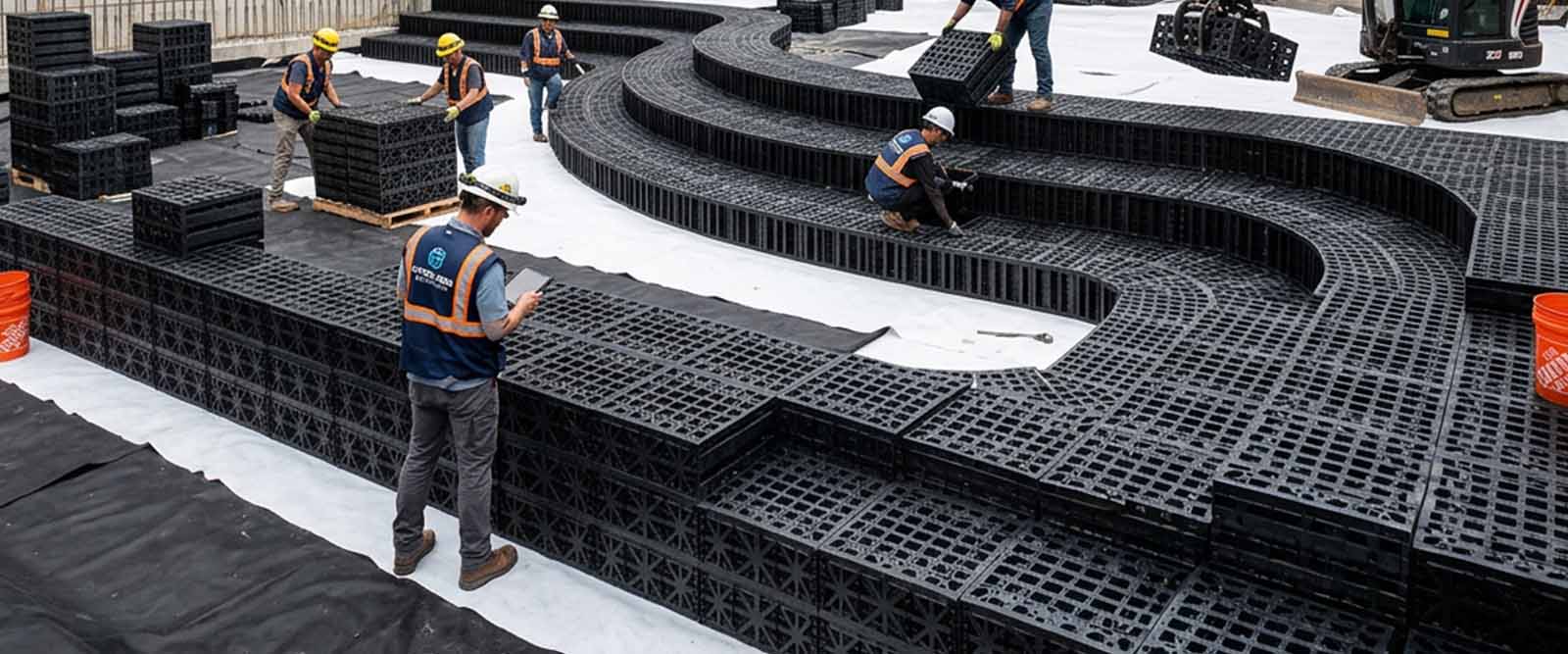
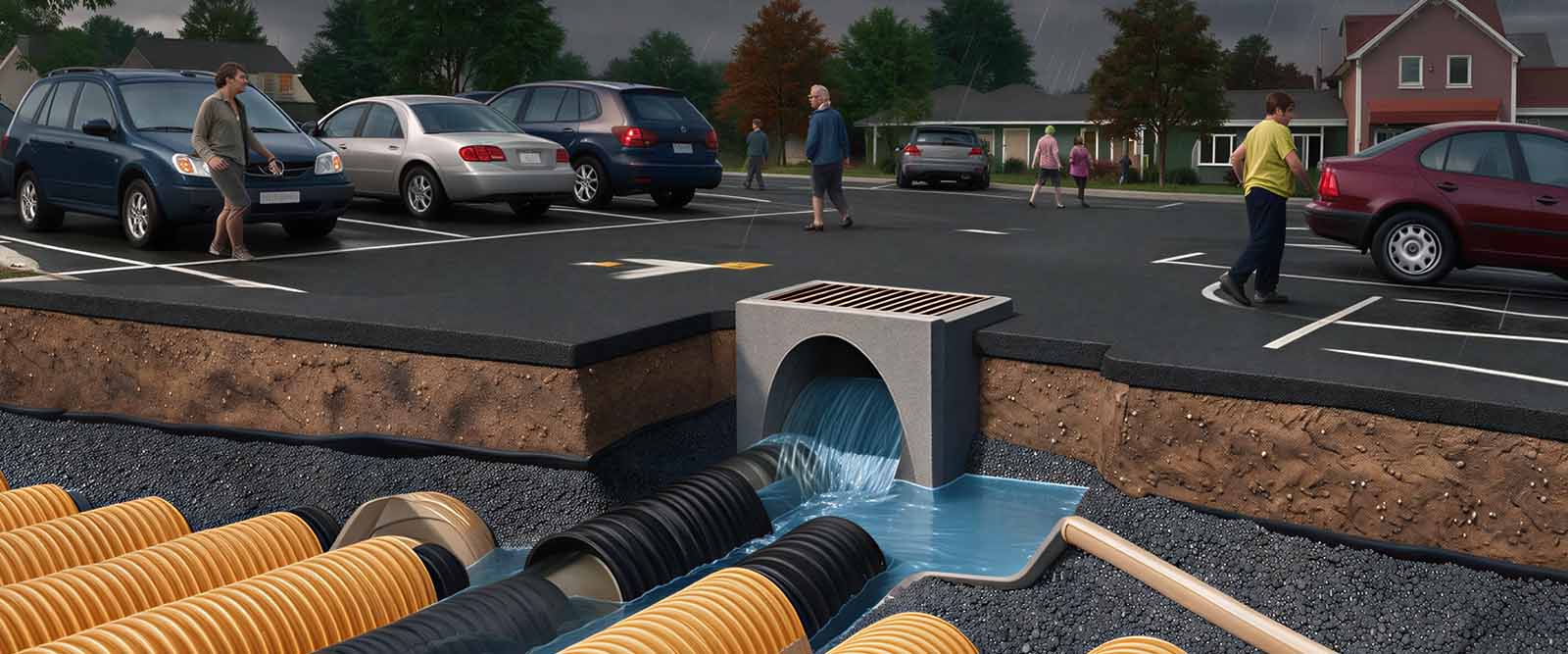
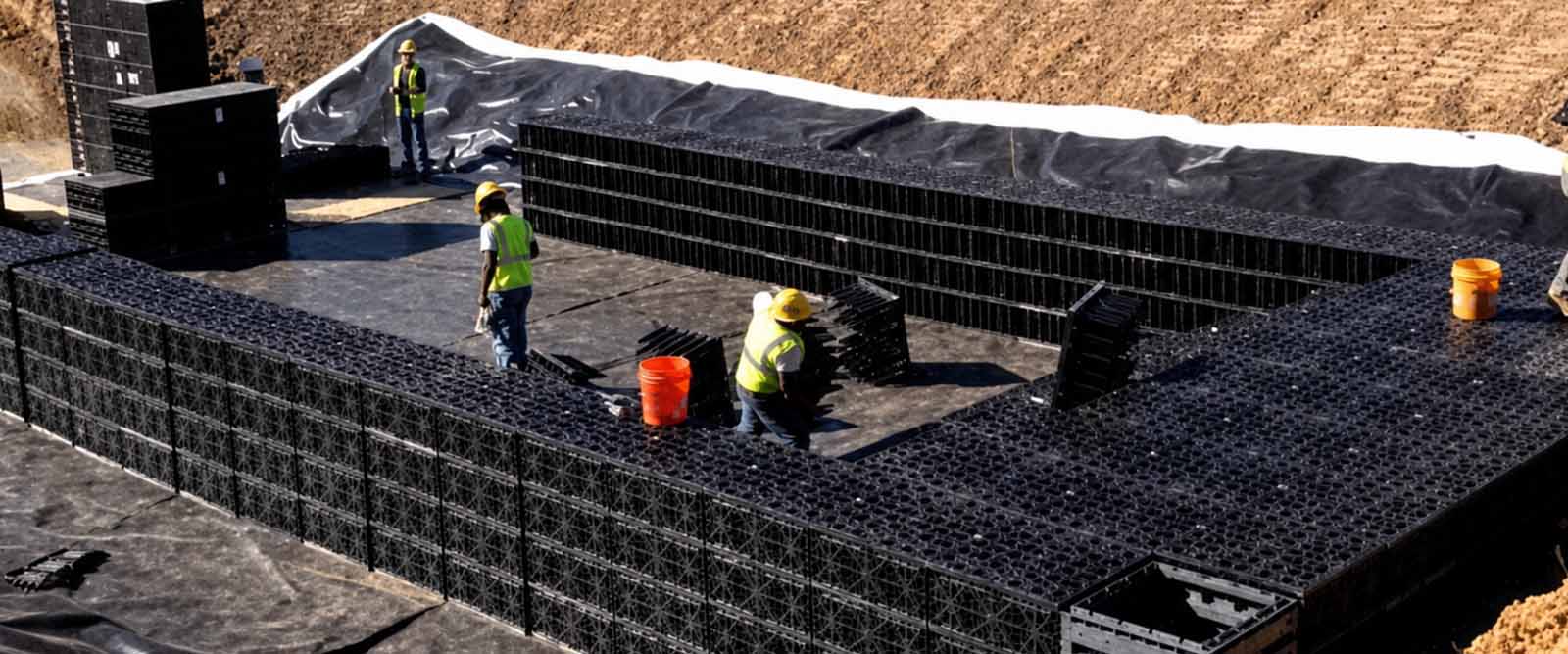
Underground detention is often selected when the project needs to preserve usable surface area. The hydraulic objective may remain the same, while the system configuration changes how the land above can be used.
On constrained sites, stormwater infrastructure competes with parking, circulation, outdoor amenities, storage areas, landscaping, and future expansion. A surface basin can take part of that land out of productive use for the life of the property.
Underground detention can preserve the area above for other project needs, although this usually comes with a higher initial system cost.
This tradeoff is especially relevant for:
-
multifamily developments
-
mixed-use projects
-
urban infill construction
-
industrial facilities
-
commercial centers
-
institutional campuses
For these projects, the comparison is often economic as much as hydraulic. The project team must weigh the additional cost of underground storage against the value of the land it preserves.
For a deeper look at design, loading, outlets, installation, maintenance, and cost drivers, see our guide to underground stormwater detention systems.
Common Mistakes That Create Problems Later
Many costly stormwater problems begin before construction, when the drainage strategy has not yet been fully coordinated with the site plan.
Stormwater should be considered alongside parking, circulation, grading, utilities, building placement, and future expansion. Treating it only as a permitting requirement can leave too little room to adjust the site once storage and discharge needs are confirmed.
Initial construction cost can also distort the comparison. A lower-cost system may create higher maintenance expenses or reduce usable land over the life of the property.
Local requirements add another layer of risk. Stormwater criteria can vary significantly between jurisdictions, even within the same state, so assumptions carried over from one project may not apply to the next.
Early coordination between the civil engineer, developer, design team, and system supplier helps identify these conflicts before they become redesigns, delays, or additional construction costs.
A Practical Roadmap for Choosing the Right Stormwater Approach
Project Stage |
Primary Objective |
Key Question |
| Site Evaluation | Identify physical and land-use constraints. | How much space is available, and what other site uses must be preserved? |
| Hydrologic Analysis | Define stormwater storage and discharge needs. | How much runoff must be managed, and how can it leave or remain on the site? |
| Regulatory Review | Confirm applicable design and permitting requirements. | What storage, discharge, infiltration, or water quality criteria apply? |
| System Comparison | Compare retention and detention approaches. | How will each option affect land use, construction, and site flexibility? |
| Lifecycle Assessment | Evaluate long-term ownership requirements. | What inspection, maintenance, access, and operating costs should be expected? |
| Final Selection | Select the approach that best fits the project. | Which option provides the best balance of performance, land use, cost, and long-term ownership? |
Choosing the Right Approach
Retention and detention address different stormwater objectives, so the choice starts with what needs to happen to the water after it is captured.
Storage duration, discharge requirements, water reuse goals, downstream capacity, site constraints, and long-term ownership all influence the final approach.
If Your Project... |
Retention May Be More Suitable |
Detention May Be More Suitable |
| Needs longer-term stormwater storage or reuse | ✓ | |
| Requires temporary storage followed by controlled discharge | ✓ | |
| Includes a permanent wet pond or similar long-term storage feature | ✓ | |
| Must reduce peak runoff before discharge to downstream infrastructure | ✓ | |
| Needs to keep stormwater on site for reuse, infiltration, or other approved management | ✓ | |
| Has strict discharge-rate limits after storm events | ✓ |
Land availability still affects the configuration, but it does not determine the system function by itself. Both retention and detention can use surface or underground storage depending on the project. Final selection should follow the hydraulic requirements, site constraints, local criteria, and long-term goals of the property.