
- Home
- Products
- Groundwork Materials: Piles, Pipes & More
- Steel Sheet Pile Supplier
Project-Integrated Steel Sheet Piling Solutions
More Than Steel Sheet Piles. A Solution Built Around Your Project.
Engineering-Focused Selection
Match sheet pile profiles, section properties, and material specifications to project loads, soil conditions, and installation requirements.
Cost & Performance Optimization
Evaluate alternative profiles, material quantities, installation constraints, and procurement options to improve project economics without compromising specified performance.
Integrated Project Supply
Coordinate technical requirements, manufacturers, documentation, and logistics to deliver a system aligned with your construction plans.
A Priori Source approaches steel sheet piling as part of a complete construction strategy. We work with project teams to evaluate structural requirements, ground conditions, installation methods, and cost considerations, helping identify suitable systems and coordinate their supply. Our focus is on delivering a solution that fits the project, not simply supplying steel.
The Challenge: Choosing Steel Sheet Piles That Fit the Site
Selecting steel sheet piles involves more than meeting structural load requirements. Soil conditions, groundwater levels, adjacent structures, installation access, and project schedules all influence which profiles and installation methods are practical. In urban and coastal construction, vibration limits, corrosion exposure, and restricted working space can further complicate the decision.
Even technically suitable sheet piling can become unnecessarily expensive when profile dimensions, steel grades, pile lengths, or installation requirements are poorly coordinated. Oversized sections increase material costs, while unsuitable profiles or limited equipment access can lead to delays, design revisions, and additional construction expenses.
The challenge is finding the right balance between structural performance, site conditions, installation feasibility, and total project cost. This requires looking beyond individual steel sections and considering how the entire sheet piling system fits into the construction plan.
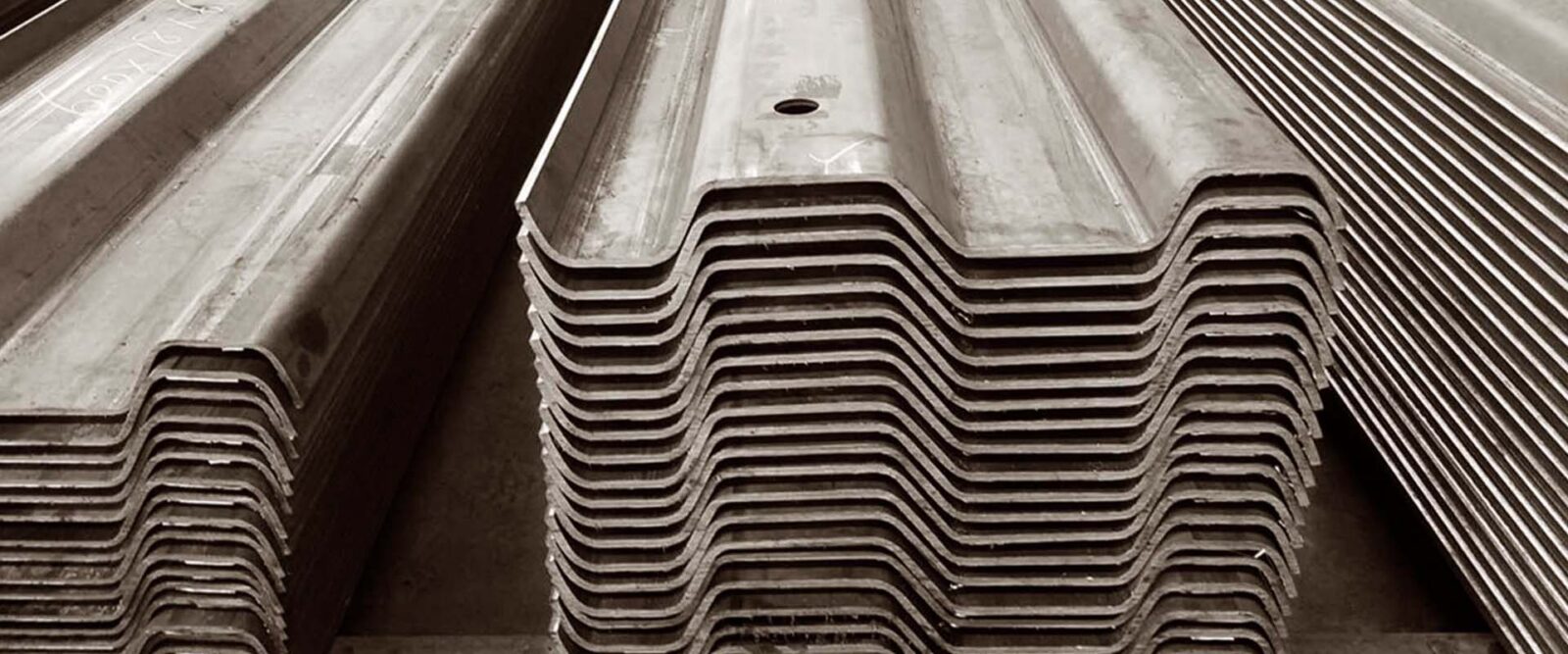
Our Solution: Steel Sheet Piling Matched to Your Project
At A Priori Source, we approach steel sheet piling as part of the overall construction strategy. Working with contractors, developers, and engineering teams, we evaluate project specifications, structural requirements, soil and groundwater conditions, installation constraints, and budget considerations to identify suitable sheet piling solutions.
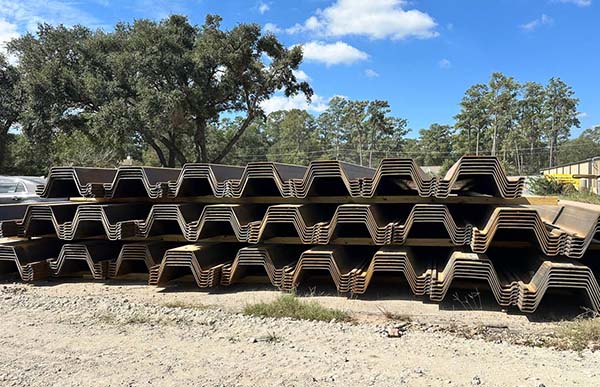
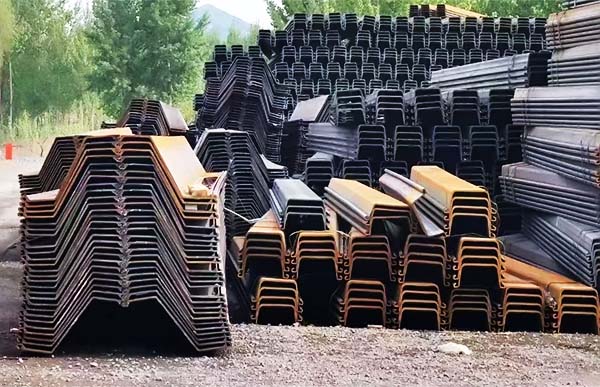
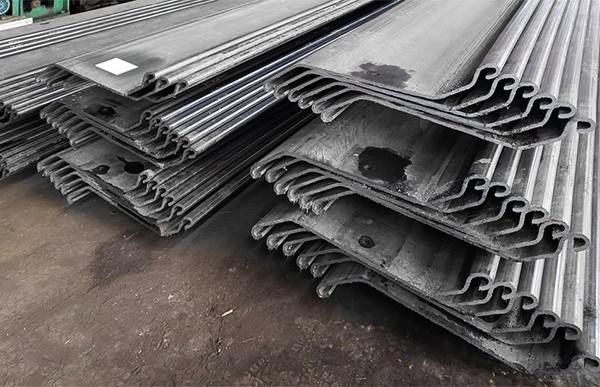
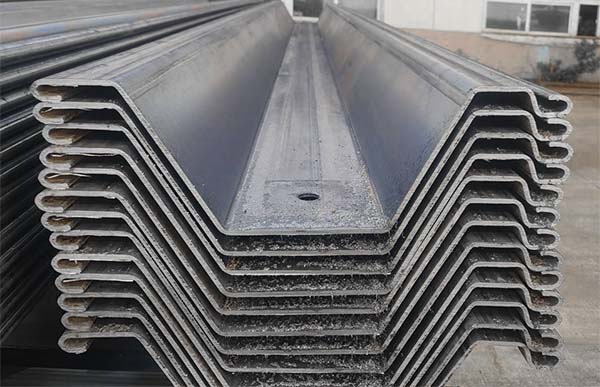
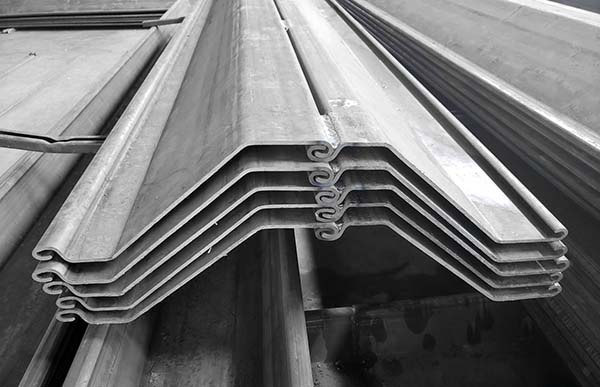
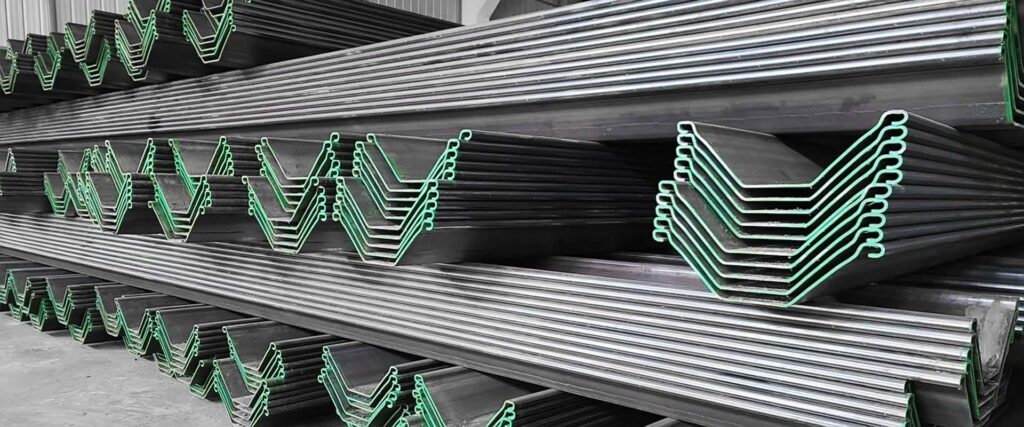
Our sourcing focuses on U-type, Z-type, and Omega-type steel sheet pile profiles, with available sections selected according to project requirements. By comparing section properties, steel grades, pile lengths, installation compatibility, and manufacturer options, we help optimize material selection and procurement costs while maintaining the specified structural performance.
Beyond product selection, we coordinate technical documentation, manufacturer communication, procurement, and international logistics. Applicable ASTM specifications, material certifications, and project-specific submittal requirements are addressed as part of the sourcing process. This integrated approach helps reduce procurement risks, avoid unnecessary expenses, and deliver steel sheet piling systems aligned with the project's engineering requirements and construction schedule.
Steel Sheet Pile Profiles and Selection Criteria
Steel Sheet Pile Profiles | Applications & Selection Considerations |
Z-Type Sheet Piles | Z-shaped profiles offer efficient bending resistance for retaining walls, deep excavations, marine structures, and other demanding applications. Selection considers section modulus, moment of inertia, wall depth, installation conditions, and required structural performance. |
U-Type Sheet Piles | U-shaped profiles are used for excavation support, cofferdams, waterfront structures, and permanent or temporary retaining walls. Available sections can be evaluated for interlock configuration, structural properties, installation compatibility, and overall material efficiency. |
Omega-Type Sheet Piles | Omega-shaped sections can provide economical solutions for selected lighter-duty retaining and ground-support applications. Their suitability depends on available section properties, soil conditions, wall height, loading, and installation requirements. |
Project-Specific Section Selection | A Priori Source helps evaluate profile width, depth, thickness, weight, section modulus, steel grade, pile length, and installation constraints against project specifications. Alternative sections and manufacturer options can be compared to optimize material use and procurement costs while meeting engineering requirements. |
Steel Sheet Pile Applications
Application | Project Considerations |
Excavation Support & Shoring | Temporary or permanent earth retention for basements, utility trenches, and deep excavations. Profile selection depends on excavation depth, soil pressure, groundwater, and adjacent structures. |
Retaining Walls | Structural support for grade changes, restricted sites, and property-line construction. Wall height, surcharge loads, deflection limits, and required service life influence system selection. |
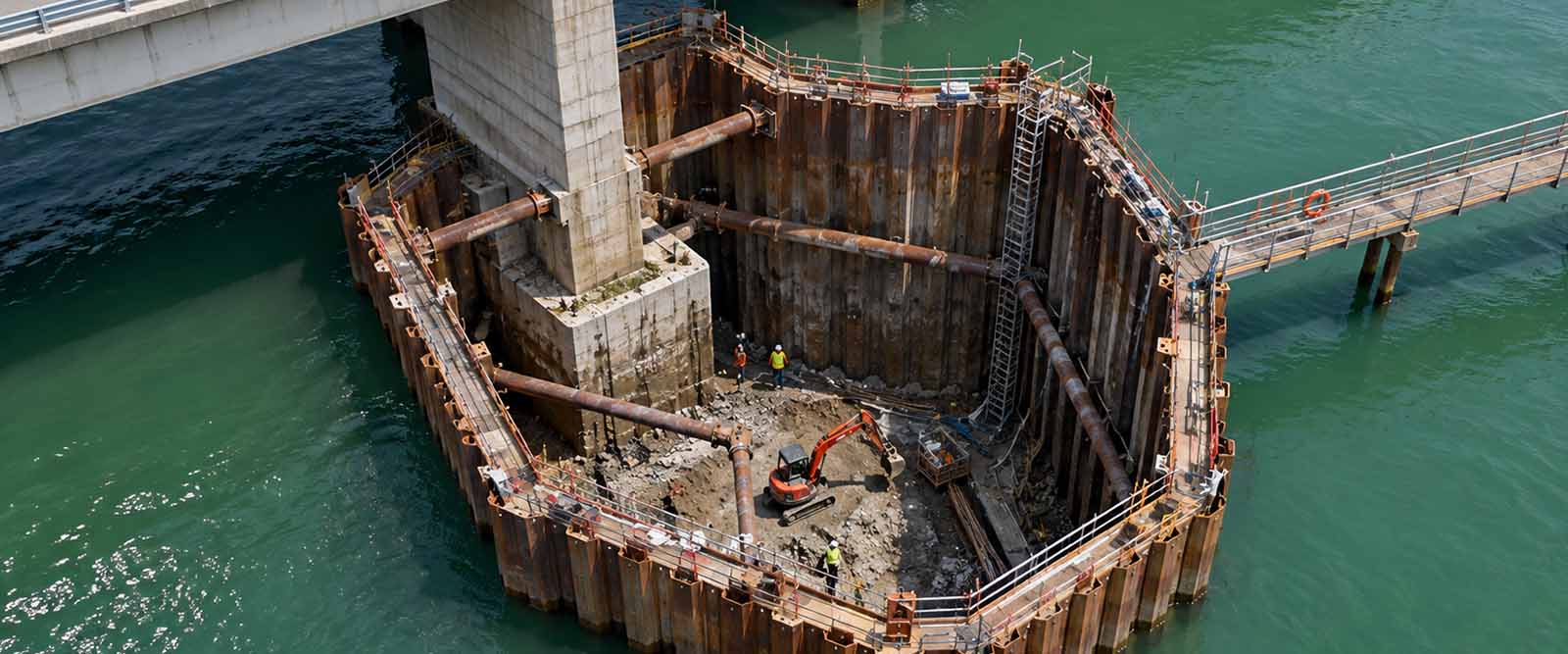
Cofferdams & Water Control | Interlocking sheet pile enclosures for bridge foundations and below-water construction. Groundwater pressure, seepage control, embedment, and temporary bracing require project-specific evaluation. |
Marine Walls & Bulkheads | Waterfront retaining structures for ports, canals, and shoreline developments. Marine exposure, corrosion protection, lateral loads, and long-term durability guide material selection. |
Temporary Construction Works | Removable earth-retention systems for construction staging and temporary excavation support. Installation access, drivability, extraction feasibility, and potential reuse affect project economics. |
Infrastructure & Foundation Works | Sheet piling for bridge approaches, roadway excavations, underground structures, and foundation-related construction. Selection must account for site conditions, engineering requirements, and installation constraints. |
Steel sheet piling is not the right solution for every retaining wall or excavation. Soil conditions, groundwater, construction access, and structural requirements can make alternative systems more practical. Understanding these differences helps project teams compare steel sheet piles with other retaining systems before selecting a construction approach.
How We Match Steel Sheet Piles to Your Project
Selecting the right sheet piling system requires coordinating structural specifications with actual site conditions, installation methods, and procurement constraints. A Priori Source works with project teams to evaluate these factors and identify technically suitable, cost-effective sourcing options.
Project Factor | What We Evaluate |
| Structural Requirements | Design loads, required section modulus, moment of inertia, deflection limits, and specified steel grades. |
| Soil & Groundwater | Geotechnical conditions, groundwater levels, soil resistance, and potential installation difficulties. |
| Wall Geometry & Dimensions | Wall height, excavation depth, required pile length, embedment specifications, and site boundaries. |
| Installation Conditions | Equipment access, driving method, vibration restrictions, adjacent structures, and construction sequencing. |
| Durability & Service Life | Temporary or permanent use, corrosion exposure, protective treatments, and expected service life. |
| Material & Cost Optimization | Alternative profiles, section weights, manufacturer availability, procurement quantities, and transportation requirements. |
| Project Documentation | Engineering specifications, applicable material standards, mill certificates, technical submittals, and approval requirements. |
Different site conditions may require adjustments to sheet pile profiles, embedment depths, support systems, and installation methods. Our article explains how steel sheet pile systems adapt to project conditions and how these decisions can influence construction efficiency and overall project costs.
Documentation, Procurement & Delivery Coordination
Steel sheet piling procurement requires more than selecting the right profile. Material specifications, manufacturer capabilities, production schedules, documentation, and shipping arrangements must be coordinated to meet project requirements.
A Priori Source manages these aspects of international sourcing through a structured procurement process.
Material Verification & Technical Documentation
We coordinate available mill test reports (MTRs), steel grade information, section properties, dimensional specifications, and applicable material certifications. Heat traceability and coating documentation can also be requested where required by the project.
Manufacturer & Production Coordination
We evaluate manufacturer capabilities, available profiles, production requirements, and order quantities. Alternative sourcing options may be considered to balance technical suitability, material costs, and procurement schedules.
Quality & Specification Coordination
Before shipment, we coordinate specified material characteristics, required documentation, and applicable inspection arrangements with manufacturers. Verification procedures are determined by the project requirements and agreed procurement terms.
International Shipping & Jobsite Delivery
Our supply planning considers pile lengths, bundle dimensions, cargo handling, shipping routes, port arrangements, and inland transportation. Delivery schedules and lead times are established according to manufacturer availability, order requirements, and logistics conditions.
Benefits of Steel Sheet Piles
Structural Performance for Demanding Loads
Steel sheet piles resist lateral earth and water pressure in retaining walls, excavations, and marine structures. Different section properties and steel grades allow engineers to select profiles according to design loads, soil conditions, and required wall performance.
Space-Efficient Construction
Interlocking steel sections form continuous retaining walls with a relatively narrow footprint. This makes sheet piling particularly useful for urban excavations, property-line construction, and sites where access or available working space is limited.
Flexible Installation Methods
Steel sheet piles can be installed using vibratory, impact, or hydraulic press-in equipment, depending on ground conditions and site restrictions. Press-in methods can help limit vibration and noise near existing buildings and sensitive infrastructure.
Durability in Challenging Environments
Steel grades, corrosion allowances, protective coatings, and other project-specific measures can be selected to address marine exposure, groundwater conditions, and long-term service requirements. Proper specification helps balance durability, maintenance, and lifecycle costs.
Reuse and Material Efficiency
Steel sheet piles used in temporary works can often be extracted and reused when their condition and installation requirements permit. Reuse reduces material demand across projects, while steel recycling provides an additional end-of-life recovery option.
Adaptable Water Control
Interlocking profiles create continuous barriers that can help limit groundwater movement in cofferdams, excavations, and waterfront structures. Seepage performance depends on interlock condition, sealing measures, installation quality, and the overall wall design.
Cost Optimization Through Profile Selection
A range of sheet pile sections, lengths, and steel grades allows material selection to be matched to structural and installation requirements. Comparing technically suitable options can reduce unnecessary steel consumption, improve procurement efficiency, and help control total project costs.
Compliance & Standards
Steel sheet pile selection for U.S. construction projects requires coordination between material specifications, structural design criteria, and site-specific requirements. Applicable ASTM standards may include ASTM A328/A328M for carbon steel sheet piling, ASTM A572/A572M for high-strength low-alloy structural steel, and ASTM A690/A690M for specified steel piling applications in marine environments. The appropriate standard and steel grade depend on the project specifications and available manufacturer documentation.
Structural design and installation requirements may also reference guidance from the Federal Highway Administration (FHWA), AASHTO, the U.S. Army Corps of Engineers (USACE), and applicable state or local transportation authorities. These requirements address engineering considerations such as lateral loads, wall stability, groundwater conditions, and installation constraints rather than serving as universal product certifications.
A Priori Source coordinates with manufacturers and project teams to verify specified material properties, section dimensions, steel grades, and documentation requirements before procurement. Available mill test reports, material certificates, and technical data can support engineering review and project submittals. Our approach helps identify compliance gaps early and align material sourcing with the project's technical requirements.
Frequently Asked Questions About Steel Sheet Piles
What information is needed to get a steel sheet pile quote?
Which steel sheet pile profiles can A Priori Source supply?
How can steel sheet pile selection reduce overall project costs?
How do soil conditions and excavation depth affect steel sheet pile selection?
Can steel sheet piles be supplied in custom lengths, grades, and protective finishes?
What ASTM standards and technical documentation apply to steel sheet piles?
Can steel sheet piles provide effective groundwater control?
What are the main types of steel piles used in construction?
Why Choose A Priori Source for Steel Sheet Piling
Successful sheet piling procurement starts with understanding the project, not simply comparing steel prices. At A Priori Source, we work with contractors, developers, and engineering teams to identify suitable products, evaluate sourcing alternatives, and coordinate technical requirements with manufacturers.
Our approach considers structural specifications, ground conditions, installation constraints, material availability, and total project costs. By connecting technical selection with international sourcing and logistics, we help clients avoid unnecessary expenses, reduce procurement risks, and obtain steel sheet piling solutions tailored to their construction needs.
Project-Specific Technical Selection
We evaluate available profiles, section properties, steel grades, and installation requirements against project specifications to identify suitable sourcing options.
Cost Optimization Beyond Material Pricing
We compare technically acceptable sections, manufacturer options, material quantities, and transportation requirements to improve overall project economics.
Manufacturer Selection & Quality Coordination
We work with international manufacturers to coordinate specified material properties, production requirements, quality documentation, and applicable ASTM specifications.
Technical Documentation & Specification Support
We help coordinate available mill test reports, section data, material certificates, and project-specific submittal requirements for review by the engineering team.
Integrated Procurement & Logistics
From manufacturer coordination and production planning to international shipping and delivery, we organize the supply process around project requirements and construction schedules.
What We Need to Prepare Your Steel Sheet Pile Quote
Accurate steel sheet piling quotations start with clear project requirements. A Priori Source reviews available specifications and drawings to identify suitable profiles, evaluate manufacturer options, and develop a cost-effective supply proposal.
For a more precise quotation, please provide the following information where available:
Project Drawings & Specifications: Wall layouts, engineering drawings, required section modulus, and structural design criteria.
Profile & Material Requirements: Preferred U, Z, or Omega sections, steel grade, pile length, and any dimensional restrictions.
Quantities: Required number of piles, total wall length, or estimated tonnage.
Site & Installation Conditions: Soil and groundwater information, installation restrictions, and temporary or permanent use.
Durability Requirements: Marine exposure, corrosion protection, coatings, or specified service life.
Delivery Details: Project location, required delivery date, and any transportation or unloading constraints.
Documentation: Applicable ASTM specifications, mill test reports, material traceability, and project-specific submittal requirements.
Don't have a finalized specification yet? We can review preliminary project information, discuss available options, and help identify the technical details needed to move toward procurement.
Let's Find the Right Steel Sheet Piling Solution for Your Project
Every construction project presents different structural, geotechnical, and logistical challenges. At A Priori Source, we help turn these requirements into practical sourcing solutions by evaluating steel sheet pile profiles, technical specifications, manufacturer options, and overall project costs.
Whether you're planning excavation support, a retaining wall, or a marine structure, our team can help identify suitable materials, explore cost-saving alternatives, and coordinate documentation and delivery around your construction schedule.
Have drawings, specifications, or preliminary project requirements? Contact A Priori Source to discuss your project and request a tailored steel sheet piling proposal.