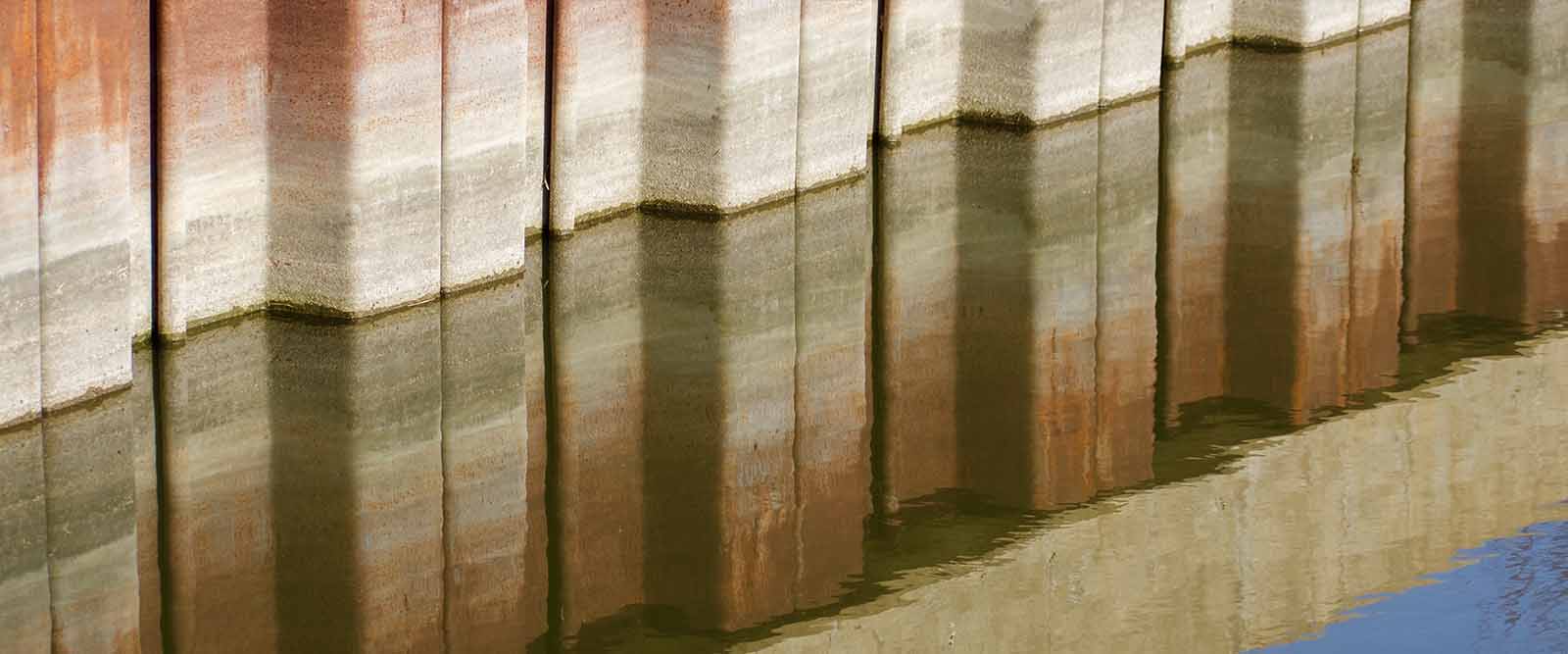
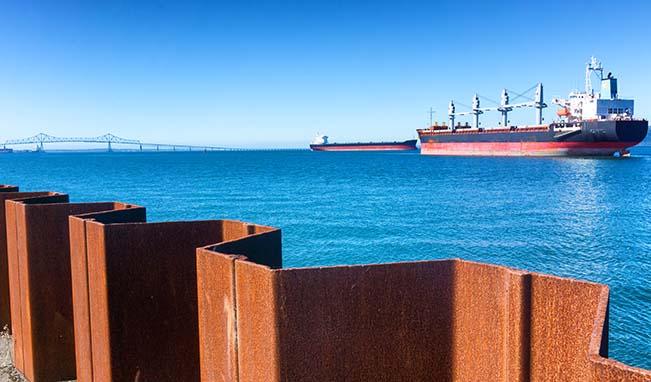
In construction, most failures do not happen because a material is weak. They happen because a system turns out to be rigid where the project demands flexibility.
Soil conditions shift between boreholes. Groundwater behaves differently than expected. Urban sites impose constraints that were not visible at the design stage. And timelines rarely stay fixed.
This is where the concept of adaptability becomes critical.
Steel sheet piles are often discussed in terms of strength, cost, or speed. But their real value emerges elsewhere. They are one of the few structural systems that can adjust to changing conditions without forcing a complete redesign of the project.
From a Product to a System: How Sheet Piling Actually Works
To understand adaptability, it is important to move away from thinking of sheet piles as just steel elements.
A sheet pile wall is a system. It interacts with soil, groundwater, installation equipment, and structural loads simultaneously. Unlike rigid concrete walls, it does not resist forces in isolation. It works with the ground.
This distinction matters.
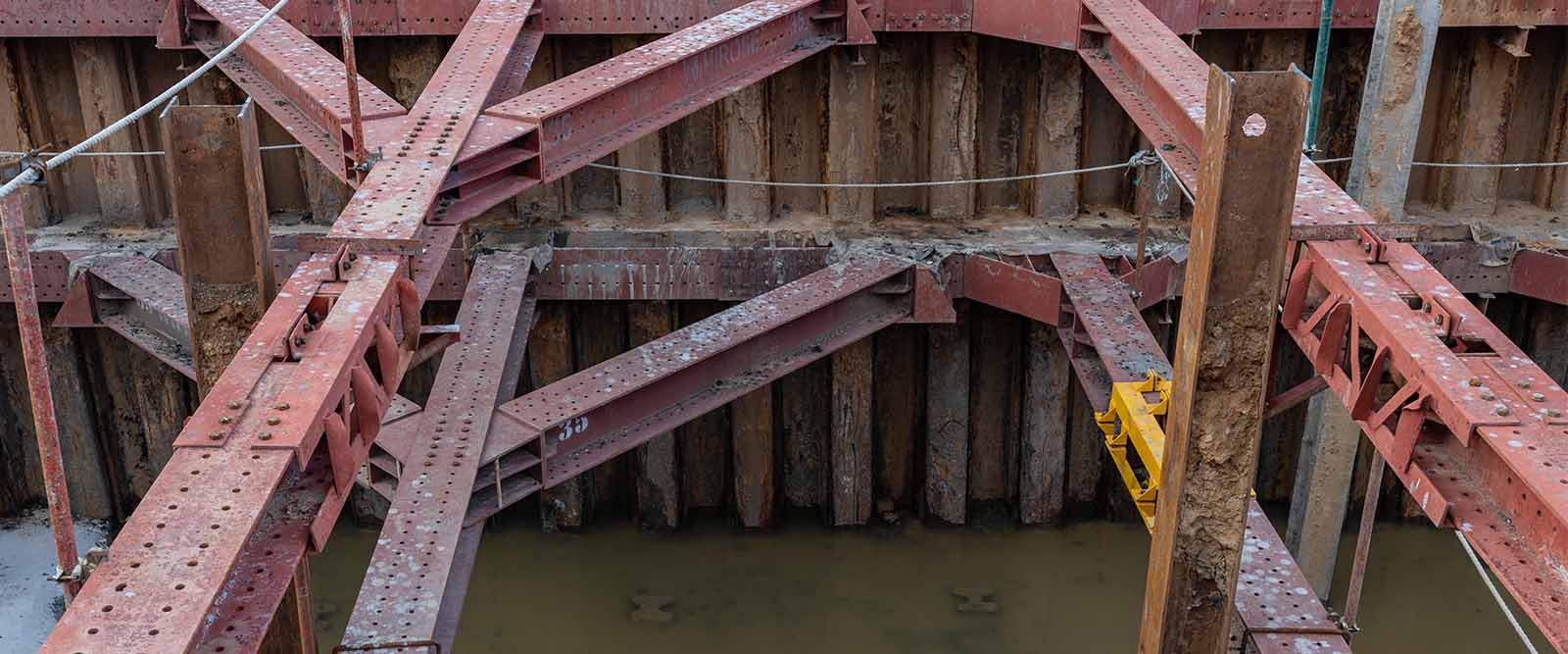
Because the system is flexible, engineers can modify it during design and even during construction. Embedment depth can be increased. Anchors can be added. Profiles can be upgraded. Installation methods can change depending on site constraints.
That ability to adjust without restarting the project is the foundation of adaptability.
What Adaptability Means on a Real Construction Site
On paper, every retaining system works. In reality, no site behaves exactly as predicted.
Consider a typical urban excavation. The geotechnical report may indicate layered soils, but actual conditions often vary within meters. Groundwater levels can fluctuate. Adjacent structures introduce vibration limits that were not initially critical.
In such conditions, a rigid system becomes a liability.
Steel sheet piles allow adjustments without structural compromise. If soil resistance is lower than expected, embedment depth can be increased. If lateral loads grow, anchors can be introduced. If vibration becomes an issue, installation can shift from impact driving to press-in methods.
These are not theoretical advantages. They are the difference between controlled adaptation and costly redesign.
How Steel Sheet Piles Compare to Alternative Systems
Adaptability becomes more apparent when sheet piles are compared to other retaining solutions.
Concrete walls, for example, offer strength and permanence, but once cast, they are effectively fixed. Any design change requires demolition or structural modification.
Diaphragm walls provide excellent performance in deep excavations, especially where water tightness is critical. However, they require complex equipment, long setup times, and offer little flexibility once construction begins.
Systems like soldier piles and lagging sit somewhere in between, offering moderate flexibility but limited performance in high groundwater conditions.
The comparison below illustrates how these systems behave when adaptability becomes a priority:
| System | Ability to Adjust During Construction | Performance in Variable Soils | Reusability | Installation Flexibility |
| Steel sheet piles | High | High | High | High |
| Cast-in-place concrete | Low | Medium | None | Low |
| Diaphragm walls | Low | High | None | Low |
| Soldier pile and lagging | Medium | Medium | Partial | Medium |
This does not mean sheet piles replace all alternatives. It means they remain stable across a wider range of unknowns.
Adaptability Through Design, Not Just Material
Another misconception is that adaptability is inherent to the steel itself. In reality, it comes from how the system is configured.
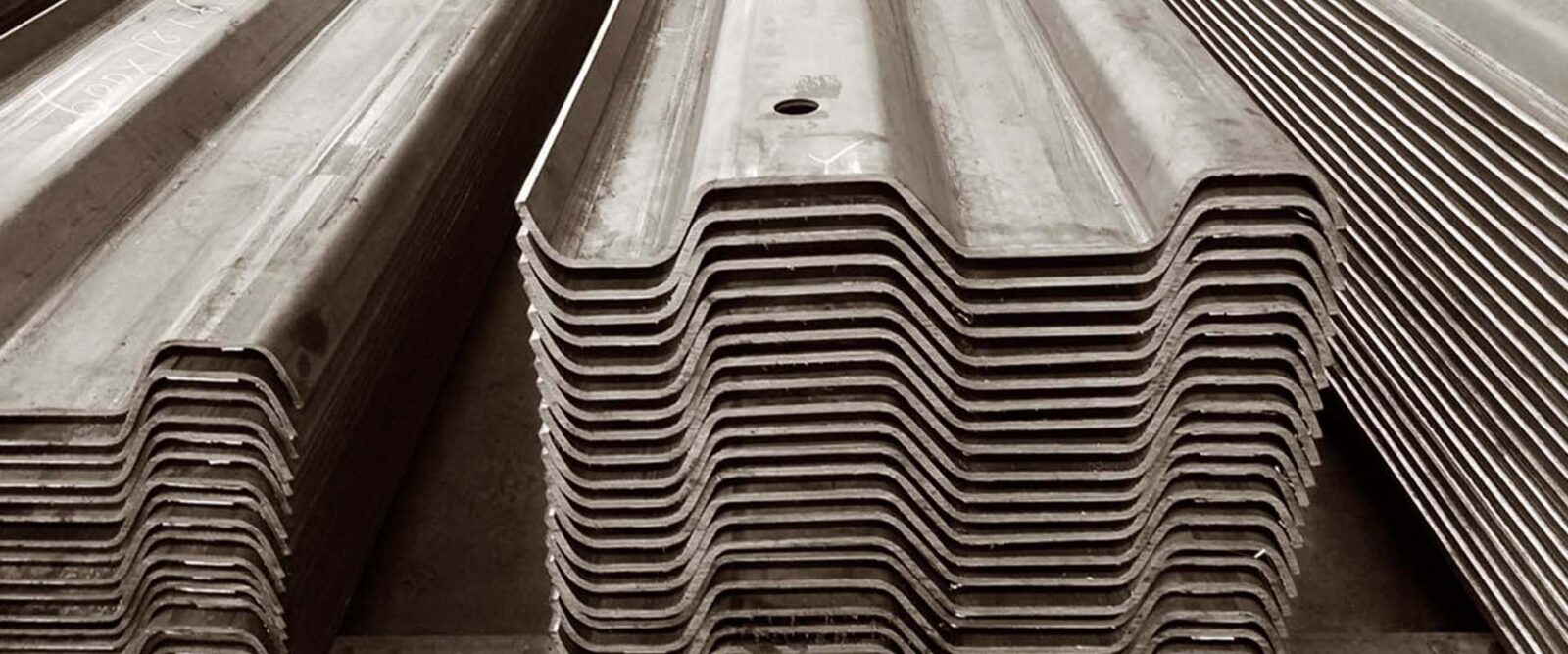
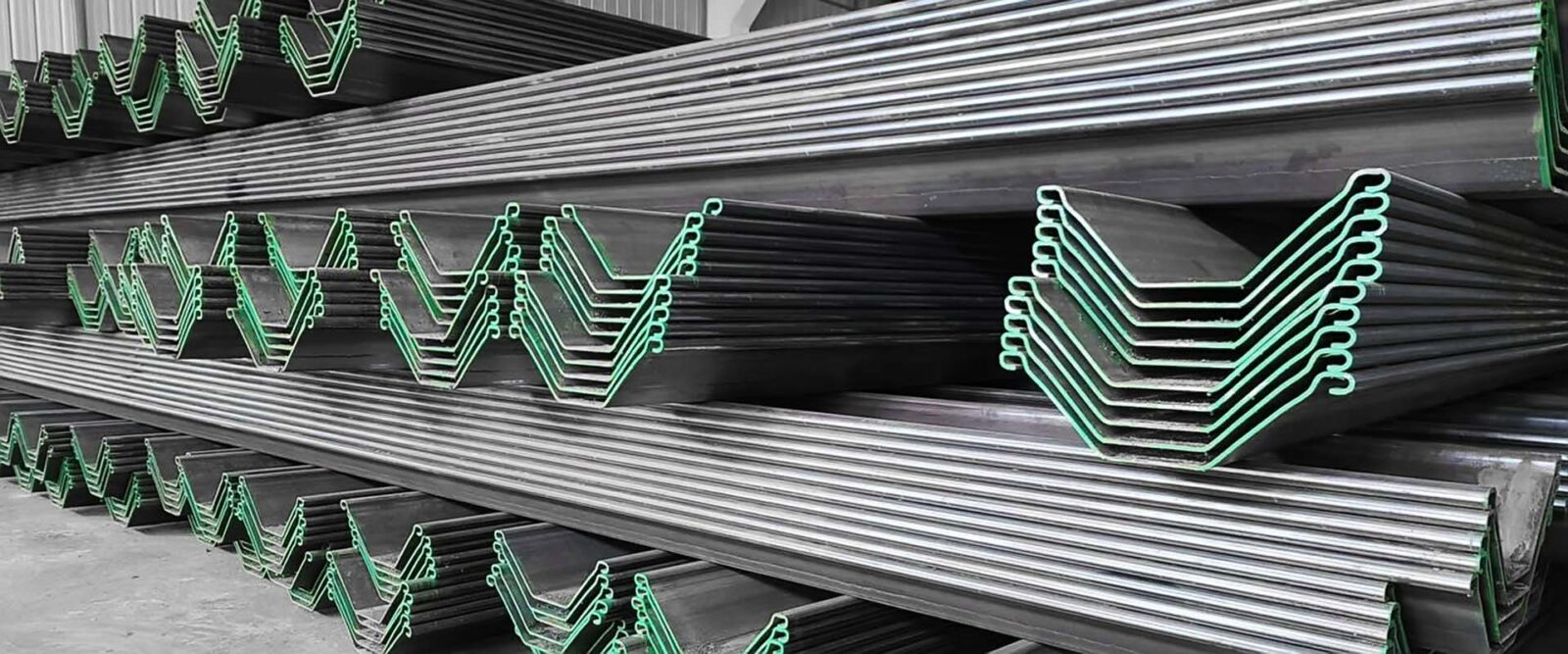
Different profiles allow engineers to respond to different structural demands. Z-type sections increase bending resistance for deeper excavations. U-type profiles balance cost and performance. Flat sheets enable circular or cellular structures.
| Profile Type | Where It Fits Best | Why It Supports Adaptability |
| Z-type | Deep excavations | Higher structural efficiency allows scaling without redesign |
| U-type | General use | Flexible balance between strength and cost |
| Flat sheets | Marine cells | Adapts to non-linear geometries |
| Cold-formed | Light structures | Enables cost control in less demanding conditions |
The purpose of these rules is to ensure that efficient lighting also delivers comfortable visual conditions.
Installation as a Tool for Adaptation
Few systems offer as much flexibility in installation methods as steel sheet piles.
On one site, speed may be the priority. Vibratory driving allows rapid installation, often reaching 10 to 30 linear meters per day per rig.
On another site, vibration may be unacceptable. In dense urban environments, hydraulic press-in systems allow near-silent installation with minimal disturbance to surrounding structures.
In harder soils, impact hammers or pre-drilling can be introduced without changing the overall system.
The ability to change installation methods without changing the design is another layer of adaptability that is often underestimated.
Durability Is Not Fixed. It Is Designed
Adaptability also applies over time.
Steel sheet piles can be engineered to perform in environments ranging from dry inland sites to aggressive marine conditions. Corrosion rates typically range from 0.01 to 0.1 millimeters per year, but this can be managed through coatings, cathodic protection, and increased thickness.
Instead of asking whether the material is durable, the more accurate question is: how should durability be designed for this specific environment?
That approach allows the same system to function across very different conditions.
Reuse and the Ability to Reverse Decisions
One of the clearest expressions of adaptability is the ability to undo a decision.
Steel sheet piles can often be extracted and reused. In many projects, 70 to 90 percent of piles can be recovered, depending on soil conditions and handling.
This has two implications.
First, temporary works do not become permanent cost. Second, project strategies can change without locking in material decisions.
However, reuse is not guaranteed. Severe corrosion, deformation, or interlock damage can limit recovery. Understanding these constraints is part of proper planning.
Cost Adaptability and Project Economics
Because sheet piles can be reused or resold, their cost behaves differently from most structural systems.
| Cost Element | Typical Range (US) |
| Material | $800–$2,500 per ton |
| Installed system | $1,500–$4,000 per linear meter |
| Residual value | 30–50 percent recovery |
This creates a form of financial adaptability. Decisions made early in the project can be adjusted later without losing full investment.
Where Steel Sheet Piles Make the Most Sense
Despite their flexibility, sheet piles are not the default solution for every project.
They are particularly effective in:
-
Waterfront and marine construction
-
Deep excavations in urban areas
-
Flood protection systems
-
Temporary retaining structures
In contrast, lighter foundation systems such as screw piles may be more appropriate for low-load structures or where minimal ground disturbance is required.
The key point is not to force one solution, but to match the system to the task.
Codes, Standards, and Predictability in the US Market
Adaptability must still operate within defined engineering frameworks.
In the United States, steel sheet pile design and installation are governed by:
-
ASTM standards for steel materials
-
AISC design principles
-
USACE guidelines for retaining structures
-
FHWA recommendations for infrastructure projects
-
OSHA requirements for safe installation
These standards ensure that flexibility does not come at the expense of reliability.
The Real Limitation: Not the Material, but the Decision
Steel sheet piles are adaptable. But that adaptability is only realized when the system is selected and configured correctly.
Choosing the wrong profile, underestimating embedment depth, or ignoring groundwater conditions can eliminate the advantages entirely. One of the most common issues in practice is insufficient embedment, which leads to excessive deflection and costly retrofits.
Adaptability is not automatic. It is engineered.
Why System Selection Matters More Than Material Choice
At the project level, adaptability is not about steel versus concrete or one technology versus another.
It is about selecting a system that can respond to uncertainty without forcing expensive corrections.
At A Priori Source, steel sheet piles are evaluated as part of that broader decision-making process. Profile selection, compliance with US standards, logistics, and integration with other foundation systems are all considered together.
The objective is not to promote a single solution, but to ensure that the chosen system remains effective as project conditions evolve.