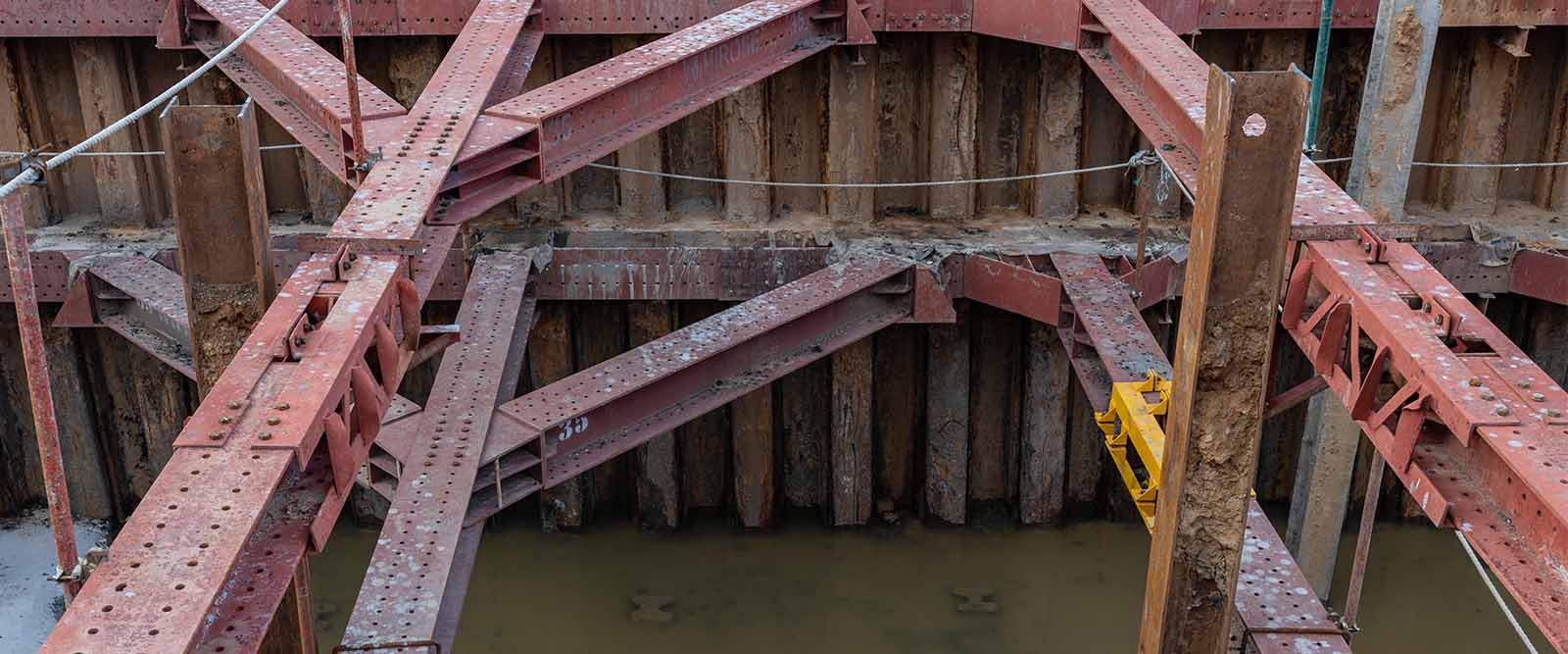
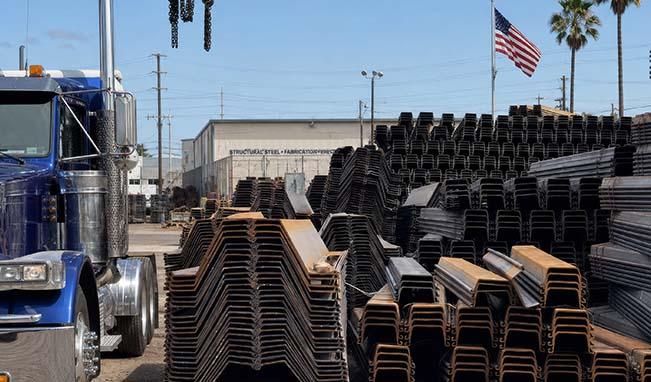
Every excavation begins with the same objective: keeping soil where it belongs.
The solution, however, is rarely the same.
Two construction sites may require an excavation of nearly identical depth, occupy similar urban lots, and support buildings of comparable size. Yet one project moves forward with steel sheet piles, another relies on secant piles, and a third is built around a reinforced concrete retaining wall. None of those decisions is accidental. Each reflects a different combination of ground conditions, groundwater, construction constraints, available working space, project schedule, and long-term performance requirements.
That is why direct comparisons between retaining systems often create more confusion than clarity. Asking whether steel sheet piles are better than concrete walls or drilled pile systems assumes that engineers begin by choosing between products. In reality, they begin by understanding the site.
Only after the project's limitations become clear does the list of practical solutions begin to narrow.
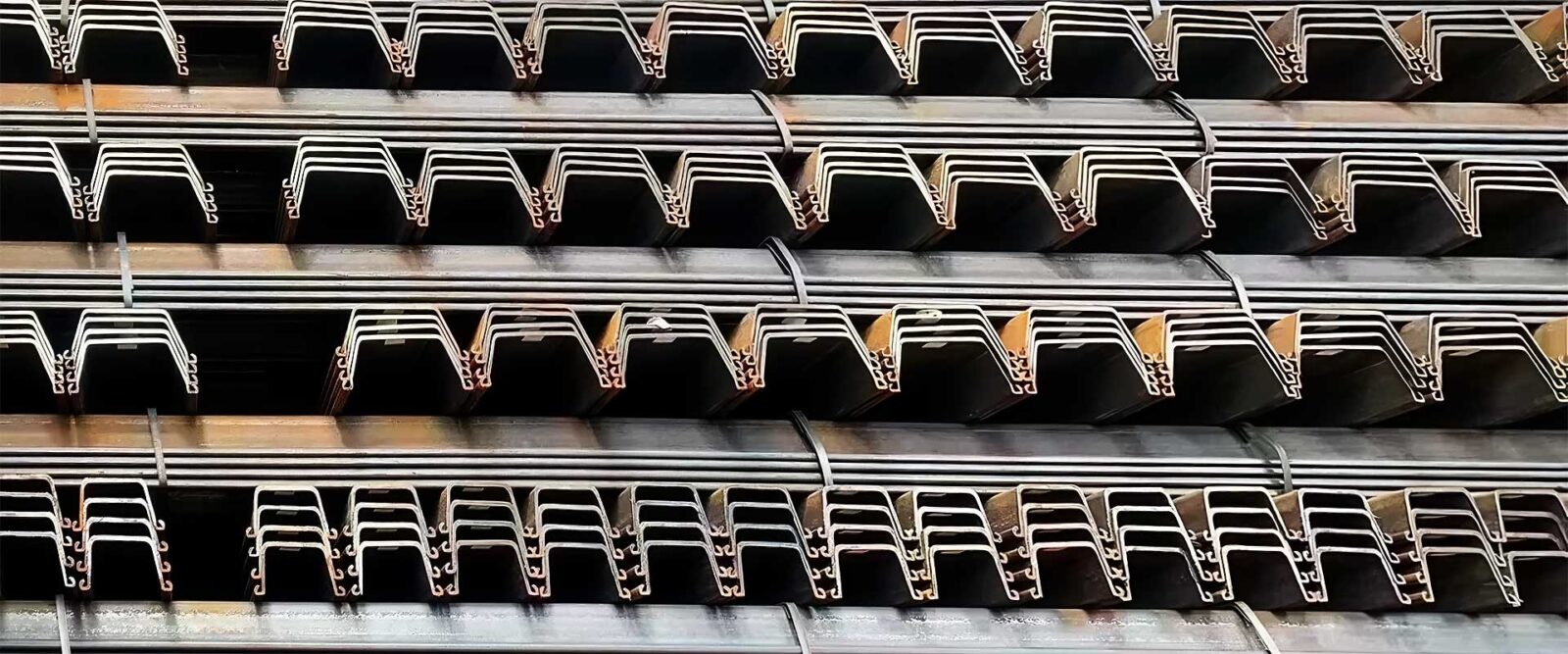
Steel sheet piles have remained one of the most widely specified retaining systems for decades. They are used in ports, flood protection projects, bridge construction, transportation infrastructure, utility work, industrial developments, and urban excavations around the world. Their continued popularity comes from a combination of structural efficiency, relatively fast installation, compact construction footprints, and the ability to recover and reuse the material after temporary works are complete.
Those characteristics make steel sheet piles an excellent solution for many projects, but not for every project.
Understanding where they fit among today's retaining technologies is far more valuable than trying to identify a single "best" retaining wall.
Every Project Starts With Constraints
Retaining systems are selected much later than many people expect.
Before calculations begin, engineers spend considerable time identifying the project's limitations. Some are created by the site itself. Others come from neighboring buildings, environmental regulations, construction sequencing, property boundaries, or the owner's schedule.
This process gradually removes unsuitable options long before the first retaining wall drawing is produced.
A site with groundwater only a few feet below grade raises completely different engineering questions than a dry excavation. Limited working space may eliminate large drilling rigs before they even arrive on site. Existing utilities can prevent the installation of tiebacks. Noise restrictions may rule out conventional impact hammers. None of these decisions depends on the structural capacity of the retaining wall itself.
The site establishes the rules first.
The retaining system simply has to work within them.
Project Condition |
Why Engineers Evaluate It First |
| Excavation Depth | Determines lateral earth pressure and overall structural demand. |
| Groundwater Level | Influences seepage control, construction methods, and long-term durability. |
| Soil Profile | Clay, dense sand, gravel, fill, and rock respond differently during installation. |
| Adjacent Structures | Controls allowable wall movement and settlement. |
| Available Working Space | Limits equipment size, excavation sequence, and support methods. |
| Construction Schedule | Faster installation can shorten the critical path of the project. |
| Temporary or Permanent Use | Strongly affects material selection and life-cycle cost. |
Where Steel Sheet Piles Enter the Discussion
Steel sheet piles are rarely selected because they are made of steel.
They are selected because they solve a specific combination of construction challenges.
Projects involving waterfronts, cofferdams, bridge foundations, flood protection, temporary excavations, utility corridors, and confined urban sites often benefit from a retaining wall that can be installed relatively quickly while occupying very little working space. Continuous interlocks also improve groundwater control compared with retaining systems that contain intentional gaps between structural elements.
Unlike many cast-in-place concrete systems, steel sheet piles may become part of the permanent structure or be extracted after construction and reused on another project. That flexibility has made them one of the most versatile earth retention solutions available today.
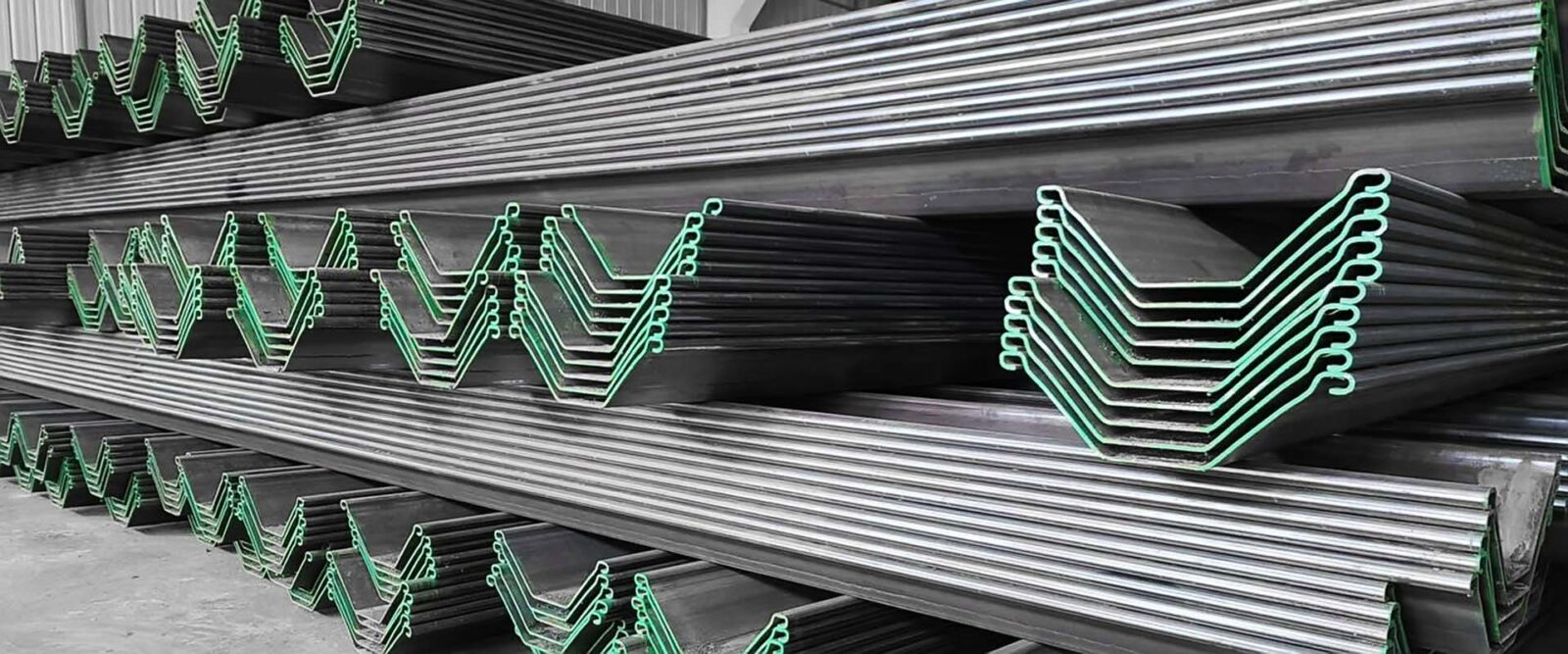
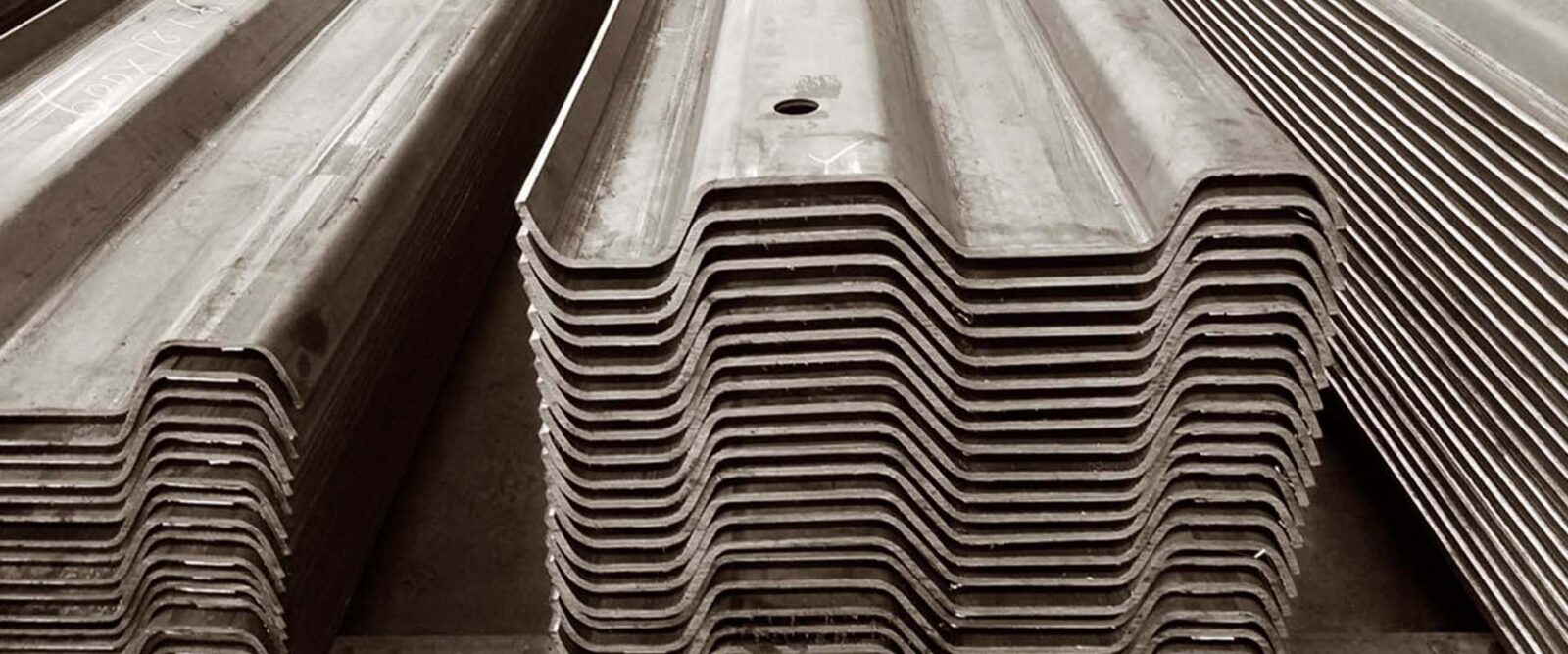
Commercial sheet piles are commonly supplied in lengths ranging from approximately 20 to 80 feet (6 to 24 m). Longer sections are regularly manufactured for marine structures, deep excavations, and transportation projects. Installation methods include vibratory hammers, impact hammers, and hydraulic press-in equipment, allowing contractors to adapt the construction method to local soil conditions and environmental restrictions.
Instead of asking where steel sheet piles can be used, a better question asks where they solve construction challenges more efficiently than competing technologies.
Typical Application |
Why Steel Sheet Piles Are Frequently Considered |
| Waterfront Structures | Continuous wall with effective seepage control. |
| Cofferdams | Fast installation and efficient removal after construction. |
| Temporary Excavations | Material can often be recovered and reused. |
| Utility Corridors | Narrow excavation footprint reduces disruption. |
| Flood Protection | Structural support combined with hydraulic performance. |
| Bridge Foundations | Reliable temporary earth retention around substructures. |
One feature distinguishes steel sheet piles from many competing systems.
The wall often becomes part of the construction process rather than simply the finished structure.
It may support excavation for several months, remain permanently in service for decades, or disappear entirely once permanent construction has been completed.
Very few retaining systems offer that level of flexibility.
Modern Retaining Systems Were Developed to Solve Different Problems
One of the biggest misconceptions in construction is that retaining systems compete directly with one another.
They rarely do.
Each technology evolved to address a particular combination of ground conditions, construction methods, groundwater behavior, and structural requirements. Some systems perform exceptionally well in temporary excavations. Others are designed to minimize wall movement around sensitive buildings. Some prioritize construction speed, while others focus on long-term durability under demanding loading conditions.
Understanding the purpose behind each system makes comparison far more meaningful than simply listing advantages and disadvantages.
-
Steel sheet piles are commonly associated with waterfront construction, temporary support systems, flood protection, bridge works, and projects where groundwater control is important. Their relatively small construction footprint and potential for reuse continue to make them attractive for infrastructure and transportation projects.
-
Soldier pile and lagging walls remain one of the most economical solutions for dry excavations. Wide spacing between structural piles reduces material quantities, while timber, precast concrete, or steel lagging is installed progressively as excavation advances. The system performs well where groundwater is not expected to become a major construction challenge.
-
Secant pile walls become attractive when excavation support and groundwater control are equally important. Overlapping reinforced concrete piles create a nearly continuous wall capable of limiting both soil movement and water infiltration. Although installation is generally slower and more expensive than driven sheet piles, secant walls are widely used in dense urban environments where adjacent structures leave very little room for ground movement.
-
Contiguous pile walls are similar in appearance but intentionally leave narrow gaps between adjacent piles. They are commonly selected where soil conditions remain stable and complete groundwater cutoff is unnecessary. The simplified construction sequence often makes them more economical than secant pile walls.
-
Diaphragm walls occupy the upper end of the retaining wall spectrum. Built by excavating slurry-supported trenches before placing reinforcement and concrete, they provide exceptional stiffness for deep excavations beneath heavily developed urban areas. Their performance comes with increased construction complexity, specialized equipment, and longer installation periods.
-
Cast-in-place reinforced concrete retaining walls are often introduced later in the construction sequence. Unlike temporary excavation support systems, they usually become part of the completed structure, retaining finished grades rather than supporting deep excavation during construction
-
Mechanically stabilized earth (MSE) walls address a different category of projects altogether. Instead of supporting vertical excavations, they efficiently retain embankments, roadway approaches, and bridge ramps where sufficient construction space exists behind the wall.
Comparing these technologies without considering project conditions rarely produces useful conclusions.
A diaphragm wall is not intended to replace sheet piles on every waterfront project. Soldier piles are not designed to outperform secant walls beneath high groundwater conditions. Likewise, steel sheet piles are not expected to become the preferred solution for every permanent retaining wall.
Each system occupies its own place within modern construction.
Comparing Modern Retaining Systems
Once the project constraints are clearly understood, the number of realistic options becomes much smaller.
The comparison below summarizes where each retaining system typically performs bes
Evaluation Criteria |
Steel Sheet Piles |
Soldier Piles |
Secant Piles |
Diaphragm Walls |
Reinforced Concrete Walls |
| Installation Speed | High | High | Moderate | Low | Moderate |
| Groundwater Control | Excellent | Limited | Excellent | Excellent | Moderate |
| Temporary Applications | Excellent | Excellent | Good | Limited | Limited |
| Permanent Applications | Excellent | Moderate | Excellent | Excellent | Excellent |
| Reuse Potential | Excellent | Limited | None | None | None |
| Construction Footprint | Small | Moderate | Moderate | Large | Moderate |
| Wall Stiffness | Moderate to High | Moderate | High | Very High | High |
| Noise and Vibration | Depends on installation method | Low | Low | Low | Low |
| Urban Excavation | Good | Good | Excellent | Excellent | Moderate |
| Marine Construction | Excellent | Limited | Good | Good | Limited |
| Relative Construction Cost | Moderate | Low | High | Very High | Moderate to High |
No table can replace project-specific engineering analysis.
What it can do is explain why different retaining systems continue to coexist after decades of technical development. Each one solves a different engineering problem, and every project begins by defining which of those problems needs to be solved first.
How Project Constraints Narrow the Choice
By this stage, the comparison is no longer between products. Several retaining systems have already been eliminated simply because they do not match the project's constraints.
This is how engineers typically approach the selection process. Rather than searching for a universal solution, they narrow the list until only a few practical options remain.
Project Condition |
Steel Sheet Piles |
Soldier Piles |
Secant Piles |
Diaphragm Walls |
Reinforced Concrete Walls |
| High Groundwater | Excellent fit | Usually requires dewatering | Excellent fit | Excellent fit | Depends on drainage design |
| Temporary Excavation | Excellent fit | Excellent fit | Often more than required | Rarely economical | Not intended for temporary support |
| Deep Urban Excavation | Depends on wall design and support system | Limited | Excellent fit | Excellent fit | Typically not used |
| Waterfront or Marine Construction | Industry standard | Rarely used | Project specific | Project specific | Limited applications |
| Restricted Working Space | Frequently suitable | Frequently suitable | Equipment dependent | Large equipment required | Construction sequence dependent |
| Need to Recover Materials After Construction | Yes | Partial | No | No | No |
| Strict Wall Movement Limits | Design dependent | Limited | Excellent fit | Excellent fit | Good |
The matrix should not be read as a ranking.
Every retaining system appears in the strongest column for at least one condition because each technology was developed to solve a different engineering challenge. The objective is not to identify a winner but to eliminate unsuitable options as early as possible.
That process often saves more time and money than comparing wall systems based on material price alone.
Looking Beyond Material Cost
One of the first questions owners ask is also one of the most difficult to answer.
Which retaining system costs less?
There is rarely a meaningful answer before the project has been investigated.
Material cost represents only one component of the overall construction budget. On many projects, it is not even the largest one.
Groundwater, installation equipment, construction duration, excavation logistics, and temporary support requirements often have a much greater influence on the final cost than the retaining wall itself.
Cost Driver |
Why It Matters |
| Groundwater Management | Dewatering systems, pumps, discharge permits, and water treatment can significantly increase construction costs. |
| Installation Equipment | Mobilization of large drilling rigs, cranes, hydraulic presses, or pile driving equipment varies considerably between retaining systems. |
| Construction Duration | Longer schedules increase labor, supervision, equipment rental, and traffic control costs. |
| Excavation Sequence | Some retaining systems require additional excavation, larger working platforms, or more complex staging. |
| Temporary Bracing or Tiebacks | Internal bracing, walers, struts, or anchors can represent a substantial portion of the retaining wall budget. |
| Material Recovery | Steel sheet piles can often be extracted and reused, reducing costs on future projects. |
| Site Accessibility | Restricted access may eliminate otherwise economical construction methods. |
| Environmental Restrictions | Noise limits, vibration monitoring, contaminated soils, and groundwater protection requirements can substantially affect total project cost. |
This explains why two retaining systems with similar installation prices can produce very different project budgets.
A wall that appears more expensive at the bidding stage may reduce groundwater pumping, shorten the construction schedule, minimize traffic disruption, or eliminate costly temporary works. Looking only at the material price rarely reflects the true cost of the retaining solution.
For that reason, experienced contractors and engineers evaluate the entire construction sequence rather than comparing retaining systems solely by unit price.
Looking at the Whole Construction Process
Retaining walls do not exist in isolation.
They influence almost every activity that follows.
The selected system affects excavation sequencing, equipment access, concrete placement, waterproofing, utility installation, backfilling, and site restoration. In urban projects, it may also determine whether neighboring roads remain open, how long adjacent businesses are affected, or whether vibration monitoring becomes necessary throughout construction.
These indirect effects rarely appear in product brochures, yet they often determine whether a project finishes on schedule.
For example, a retaining system that requires additional excavation may increase hauling costs and extend the construction program. Another system may occupy less working space, allowing multiple trades to operate simultaneously. Even relatively small differences in construction sequencing can produce measurable savings over the life of the project.
Evaluating retaining systems only by structural capacity overlooks many of the decisions that ultimately influence project success.
Final Thoughts
Steel sheet piles continue to play an important role in modern construction because they address a combination of engineering challenges that relatively few retaining systems solve equally well.
They perform particularly well where installation speed, compact construction areas, groundwater control, temporary excavation support, and future material recovery are important project priorities. These characteristics explain their widespread use in waterfront developments, transportation infrastructure, utility projects, flood protection, and temporary works.
They are not intended to replace every retaining technology.
Projects with extremely strict wall movement limits may naturally favor secant pile walls or diaphragm walls. Dry excavations with moderate structural demands often benefit from soldier pile systems. Permanent grade separation projects may be better served by reinforced concrete or mechanically stabilized earth walls.
The most successful retaining wall designs do not begin with a preferred construction method.
They begin with a thorough understanding of the site.
Once the project's constraints become clear, the list of appropriate retaining systems becomes much shorter—and the right solution is usually easier to recognize.