
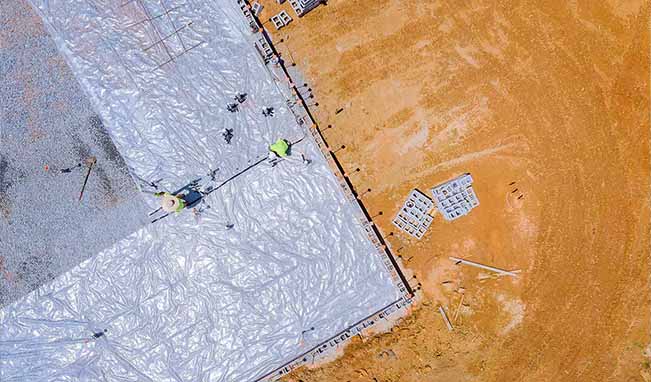
In groundwork, drainage, and environmental protection projects, the choice between geotextile fabric and geomembrane often determines the durability, regulatory compliance, and long term performance of the entire system. Contractors, engineers, municipal services, architects, and private homeowners frequently face the same question: geotextile vs geomembrane. Despite their similar appearance and shared classification as geosynthetics, these materials serve fundamentally different purposes.
This article explains the difference between geotextile fabric and geomembrane from a practical and technical perspective, with a focus on the United States construction market. The information is aligned with the geotextile and geomembrane products supplied by A Priori Source and is intended to help buyers understand not only how these materials differ, but also how to choose and purchase the correct solution for their specific application.
Why Geotextiles and Geomembranes Are Used in Modern Construction
Both geotextiles and geomembranes belong to the broader category of geosynthetics. Geosynthetics are polymer based materials designed to interact with soil, aggregate, water, and structural elements in order to improve performance, stability, drainage, and environmental protection.
Although they are often discussed together, their functions are different by design:
-
Geotextile fabric is engineered to work with soil by separating layers, filtering particles, managing water flow, and reinforcing ground structures.
-
Geomembrane is engineered to isolate soil and water by creating an impermeable barrier that blocks liquids and gases.
Understanding this distinction is critical, because choosing the wrong material can lead to drainage failure, water retention issues, environmental violations, or premature system breakdown.
What Is Geotextile Fabric
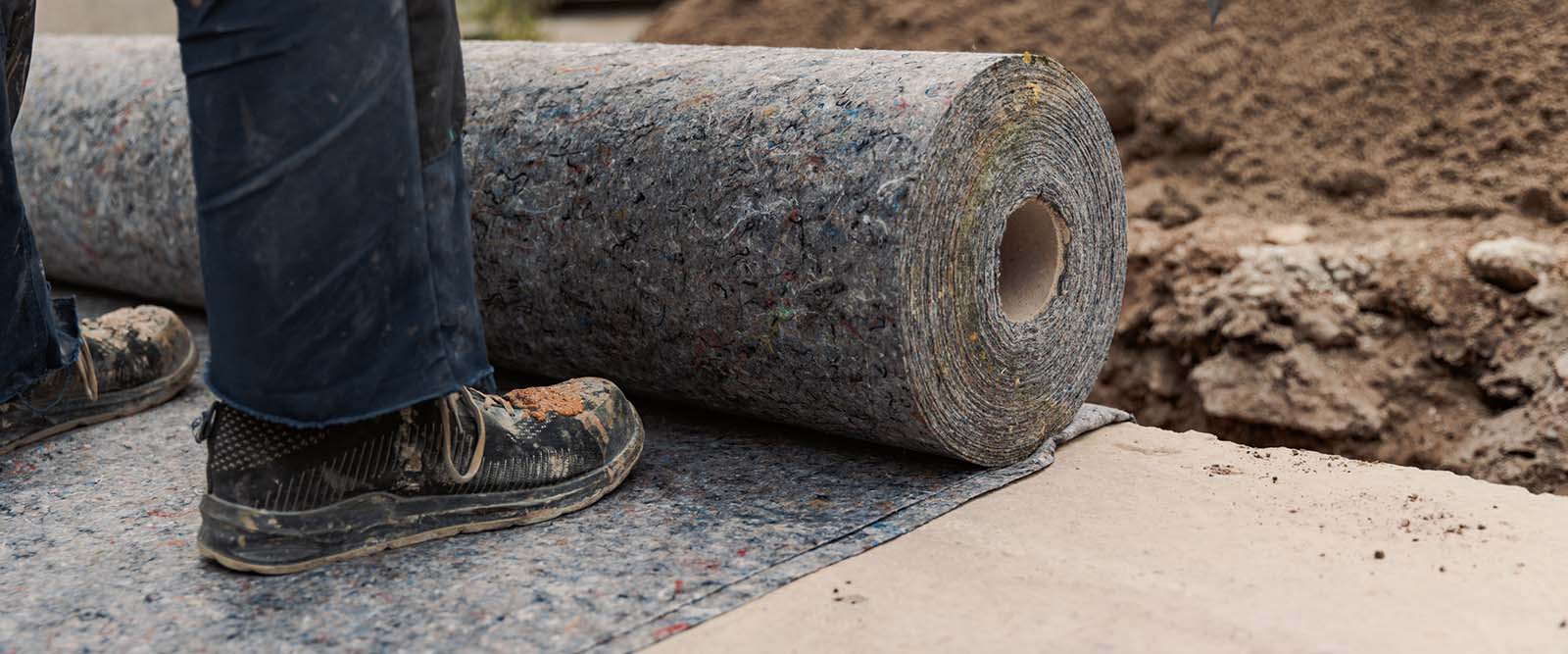
Geotextile fabric is a permeable textile material placed in direct contact with soil. In the United States market, non woven geotextile fabric is the most widely used type, although woven geotextiles are also specified for high load reinforcement applications.
Non woven geotextile fabric is manufactured from synthetic fibers, most commonly polypropylene or polyester. These fibers are bonded together through needle punching or thermal bonding, creating a three dimensional structure that allows water to pass through while retaining soil particles.
Key characteristics of non woven geotextile fabric include:
High permeability for efficient drainage
Filtration capability that prevents soil migration
Flexibility that conforms to uneven or irregular surfaces
Resistance to biological, chemical, and microbial degradation
Long service life when installed correctly
Because of these properties, non woven fabric materials are commonly used as drainage fabric, filter fabric, and nonwoven landscape fabric across infrastructure, commercial construction, and residential projects.
What Is a Geomembrane
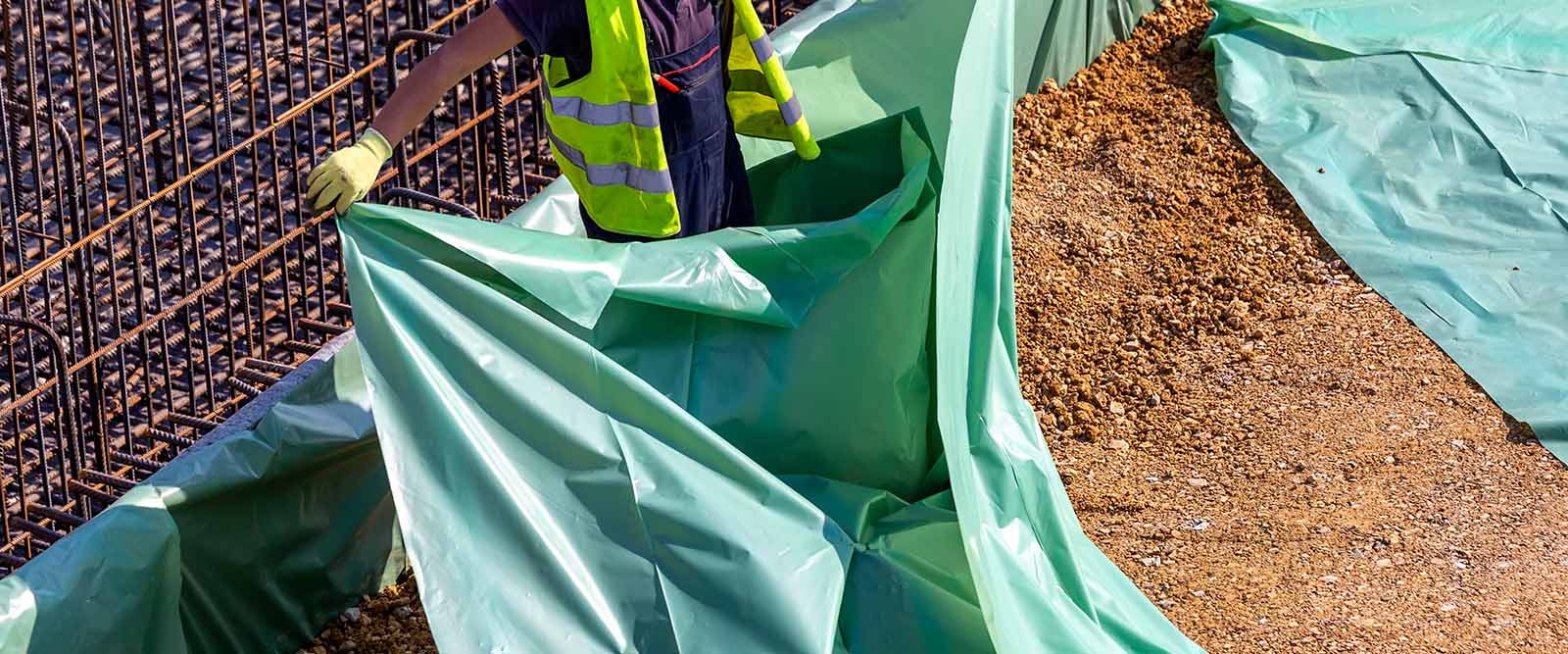
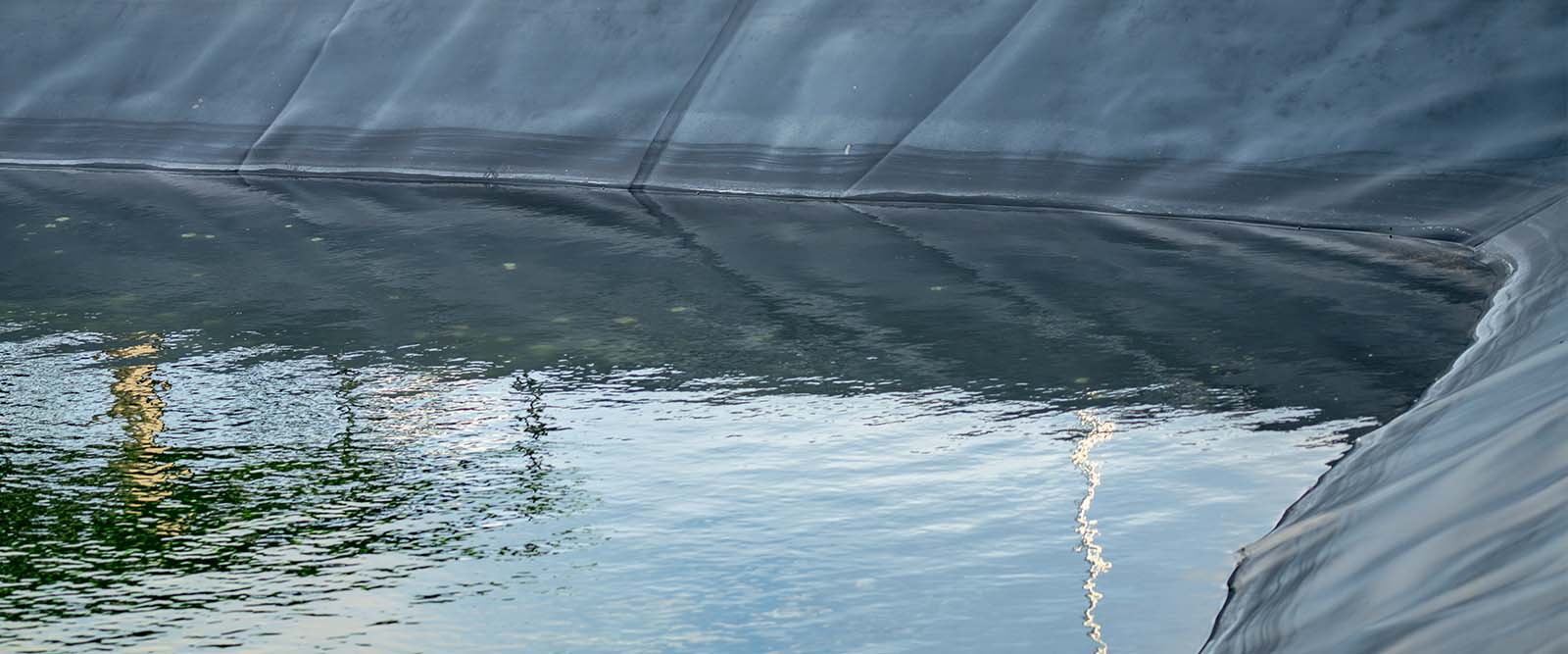
A geomembrane is a low permeability or completely impermeable synthetic sheet designed to prevent the movement of liquids or gases. Unlike geotextile fabric, geomembrane does not allow water to pass through under normal conditions.
Geomembranes are manufactured from polymers such as:
High density polyethylene
Linear low density polyethylene
Polyvinyl chloride
Flexible polypropylene
Production methods typically involve extrusion or calendaring to create continuous sheets with controlled thickness and uniform properties. Performance depends on factors such as material formulation, thickness, tensile strength, seam quality, and chemical resistance.
Geomembranes are primarily used in applications where containment, waterproofing, or environmental protection is required.
Geotextile vs Geomembrane
Core Functional Differences
The most important difference between geotextile and geomembrane is permeability. This single characteristic defines how and where each material should be used.
Aspect |
Geotextile Fabric |
Geomembrane |
| Water permeability | Permeable material engineered to allow controlled water flow through the fabric while maintaining soil stability. | Impermeable material designed to block the movement of water and gases under normal service conditions. |
| Primary water management function | Supports drainage and filtration by allowing water to pass through while retaining soil particles. | Provides waterproofing and complete containment for liquids and gases. |
| Role within soil systems | Acts as an active component that interacts with soil and aggregate to improve stability and performance. | Acts as a passive barrier layer that isolates soil from liquids and prevents leakage. |
| Soil separation capability | Separates different soil and aggregate layers to prevent mixing and loss of structural integrity. | Does not provide soil separation or filtration functions. |
| Filtration performance | Filters fine soil particles while maintaining consistent water flow through the fabric structure. | Does not filter soil or allow water movement through the material. |
| Mechanical contribution | Stabilizes aggregate layers and protects drainage systems from clogging and soil intrusion. | Does not contribute to soil stabilization or load distribution. |
| Protective function within systems | Commonly installed above or below a geomembrane to protect it from puncture, abrasion, and mechanical damage. | Requires protection from puncture and abrasion, often provided by a geotextile fabric layer. |
| Sensitivity to damage | Localized damage typically does not compromise overall system performance. | Any damage or improper installation can compromise containment and system integrity. |
Differences in Manufacturing and Materials
Aspect |
Non Woven Geotextile Fabric |
Geomembrane |
| Primary manufacturing purpose | Designed to create a permeable textile material used for drainage, filtration, soil separation, and protection within geotechnical systems. | Designed to create an impermeable barrier used for containment, waterproofing, and environmental protection. |
| Base raw materials | Manufactured from polymer resins, most commonly polypropylene or polyester, processed into individual synthetic fibers. | Manufactured from polymer resins such as HDPE, LLDPE, PVC, or polypropylene, processed into continuous sheets. |
| Material formation process | Polymer resin is melted and extruded into fibers, which are laid into a random three dimensional web structure. | Polymer resin is melted and formed into dense, uniform sheets through extrusion or calendaring processes. |
| Bonding and consolidation | Fibers are bonded together using needle punching or thermal bonding to create a stable non woven textile. | Material cohesion is achieved through controlled cooling and processing during sheet formation. |
| Resulting material structure | A porous non woven textile with controlled voids that allow water flow while retaining soil particles. | A dense, low permeability or completely impermeable membrane with no filtration capability. |
| Manufacturing performance priorities | Focus on filtration consistency, permeability, flexibility, and survivability in soil contact applications. | Focus on precise thickness control, chemical and UV resistance, tensile strength, and seam weldability. |
| Water interaction by design | Engineered to allow controlled water movement and filtration through the fabric structure. | Engineered to block water and gas movement under normal service conditions. |
| Typical performance evaluation | Evaluated based on permeability, filtration efficiency, flexibility, and long term durability. | Evaluated based on impermeability, mechanical durability, chemical resistance, and seam integrity. |
| Common material examples | Polypropylene non woven geotextile fabric and polyester non woven geotextile fabric. | HDPE geomembrane, LLDPE geomembrane, and PVC geomembrane materials. |
Differences in Manufacturing and Materials
Aspect |
Geotextile Fabric Applications |
Geomembrane Applications |
| Primary application purpose | Used where soil stability and controlled water movement must be managed simultaneously through drainage and filtration. | Used where complete impermeability is required to contain liquids or gases. |
| Transportation and infrastructure | Road and highway construction as separation and drainage fabric to prevent soil mixing and improve base performance. | Applied in transportation projects primarily for waterproofing tunnels and underground structures. |
| Ground and structural support | Retaining walls and reinforced soil structures to improve stability and drainage. | Used as barrier layers beneath or behind structures where water intrusion must be prevented. |
| Drainage systems | French drains and subsurface drainage systems where filtration and water flow are required. | Stormwater and wastewater containment systems where leakage must be eliminated. |
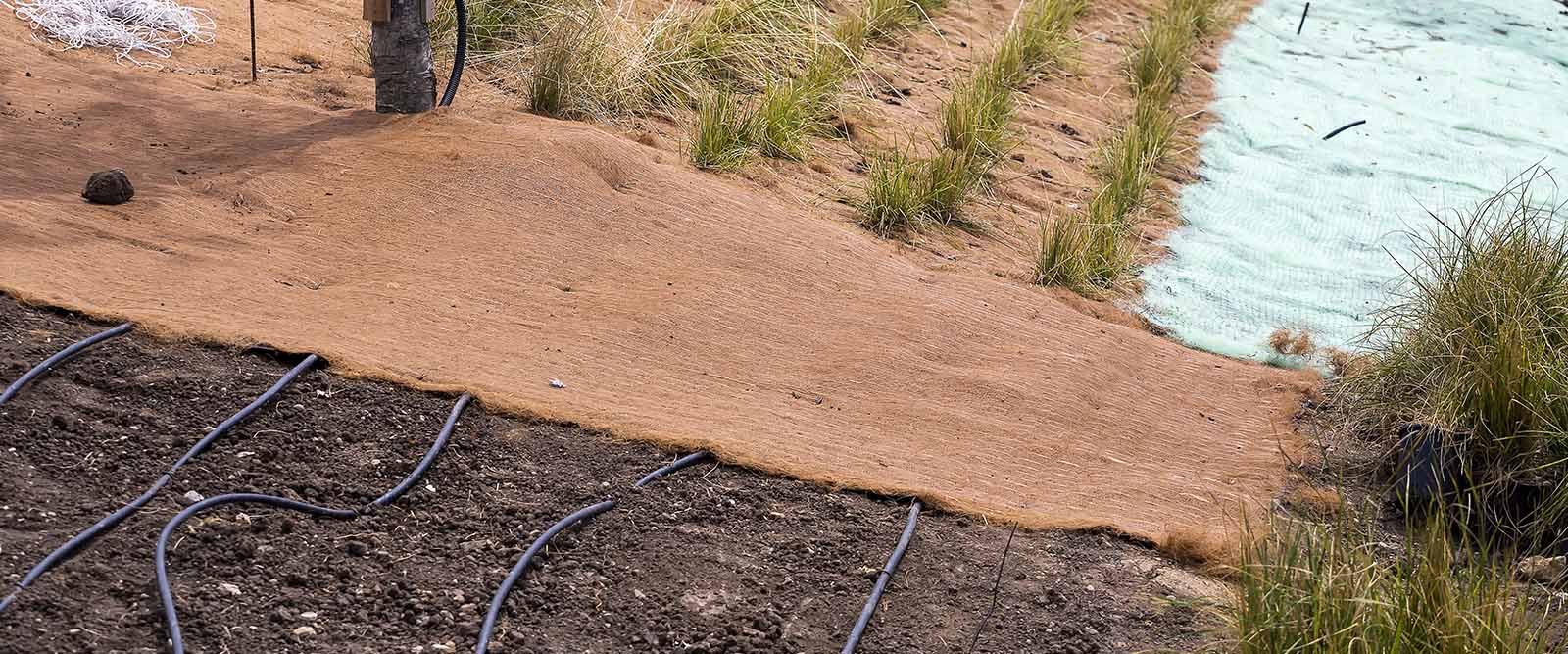
| Environmental and erosion control | Erosion control and slope stabilization by allowing water to pass while holding soil in place. | Landfill liners and caps designed to prevent environmental contamination. |
| Residential and commercial use | Landscape fabric for residential and commercial projects to manage weeds and improve drainage. | Pond, lagoon, and reservoir liners requiring long term waterproofing. |
| Industrial and environmental protection | Protection layers in composite liner systems to prevent puncture and mechanical damage. | Secondary containment for fuel, chemicals, and industrial fluids. |
| Use in composite systems | Often combined with geomembranes to provide filtration, separation, and mechanical protection. | Often combined with non woven geotextile fabric to enhance protection and system durability. |
Regulatory and Compliance Considerations in the United States
In the United States, the selection and installation of geosynthetic materials are influenced by a combination of federal, state, and local requirements, as well as industry standards.
Key regulatory and guideline frameworks include:
Environmental Protection Agency requirements for environmental containment and liner systems
Federal Highway Administration guidelines for roadway and transportation infrastructure
United States Bureau of Reclamation design standards for water related structures
ASTM testing standards for geotextile and geomembrane performance characteristics
Environmental Protection Agency requirements for environmental containment and liner systems
Federal Highway Administration guidelines for roadway and transportation infrastructure
United States Bureau of Reclamation design standards for water related structures
ASTM testing standards for geotextile and geomembrane performance characteristics
Differences for Large Infrastructure Projects and Residential Use
Project Type |
Geotextile Fabric |
Geomembrane |
| Municipal, Infrastructure, and Government Projects | Specified for drainage, filtration, soil separation, and mechanical protection in roads, highways, retaining walls, drainage systems, and public infrastructure. Selection is based on ASTM compliance, documented filtration performance, survivability, and long term durability within engineered composite systems. | Used as the primary impermeable barrier in regulated projects such as landfills, reservoirs, wastewater facilities, tunnels, and foundation waterproofing. Selection is driven by federal and state regulations, EPA requirements, thickness control, chemical resistance, and seam integrity. |
| Residential and Private Applications | Commonly used as nonwoven landscape fabric, under gravel driveways, patios, walkways, and residential drainage systems. Chosen for ease of installation, permeability, and practical soil stabilization rather than formal certification. | Used mainly for pond liners and residential waterproofing applications where impermeability is required. Selection focuses on basic durability and ease of installation rather than complex regulatory compliance. |
Summary Comparison
Feature |
Geotextile Fabric |
Geomembrane |
| Permeability | Permeable | Impermeable |
| Primary function | Filtration, drainage, separation, and protection | Containment, waterproofing, and barrier systems |
| Typical materials | Polypropylene and polyester non woven textiles | HDPE, LLDPE, PVC, and polypropylene |
| Manufacturing method | Needle punched or thermally bonded fibers | Extruded or calendered sheets |
| Water flow behavior | Allows controlled water flow through the material | Blocks water and gas movement |
| Common applications | Drainage fabric, filter fabric, and landscape fabric | Liners, containment systems, and waterproofing |
| Regulatory focus | Filtration performance and material survivability | Thickness control, chemical resistance, and seam integrity |
Final Guidance and Purchasing Considerations
The question geotextile vs geomembrane is not about which material is better. It is about which material performs the required function in a specific project.
If your application requires drainage, filtration, and soil stabilization, non woven geotextile fabric is the correct solution. If your application requires waterproofing, containment, or environmental protection, geomembrane is essential.
A Priori Source supplies geotextile fabric and geomembrane materials tailored to the requirements of United States construction, infrastructure, and residential projects. Once you understand the differences outlined above, you can confidently select and purchase the appropriate material for your application, ensuring compliance, performance, and long term reliability.