
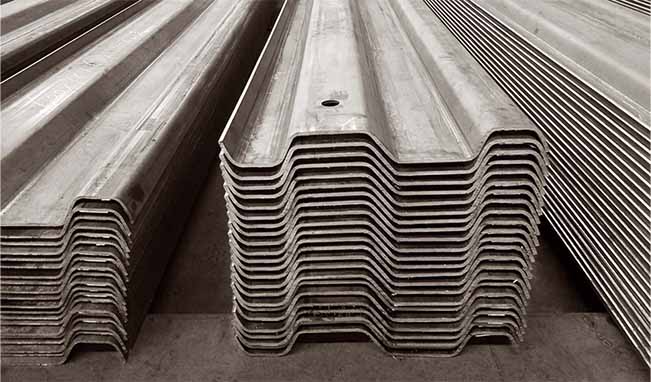
Metal sheet piles play a critical role in retaining walls, excavation support, marine structures, and infrastructure projects. However, selecting steel sheet piles based on price, profile type, or nominal strength alone can introduce significant construction risks. Material quality, dimensional accuracy, interlock condition, and compliance with project specifications all influence installation performance and long-term reliability.
For contractors, engineers, and procurement teams, evaluating steel sheet pile quality before placing an order helps identify potential discrepancies, reduce installation complications, and avoid costly material replacements. A reliable procurement process combines technical specification review, manufacturer documentation, and appropriate product inspection.
What Determines Metal Sheet Pile Quality?
Steel sheet pile quality depends on more than the strength of the steel itself. U-type, Z-type, and other interlocking profiles must satisfy specified material properties, dimensional requirements, and manufacturing tolerances to perform as intended within the designed retaining system.
Three areas deserve particular attention: verifying that the supplied material matches the approved specifications, confirming its properties through appropriate mill documentation and traceability records, and examining the physical condition of the profiles, including straightness, interlocks, surface damage, and protective coatings.
These checks help establish whether the proposed material is suitable for further engineering review and procurement approval. Final acceptance remains subject to the applicable specifications, contractual requirements, and project engineer's criteria.
Steel Sheet Pile Quality & Procurement Checklist
Before ordering steel sheet piles, procurement teams should verify that the proposed material matches the project specifications and that the manufacturer can provide the required supporting documentation. The following checklist identifies the main quality controls to review before purchase and, where applicable, before shipment.
Quality Check |
Evidence to Request |
What to Verify |
Potential Red Flags |
| Steel Grade & Standard | Material specification, steel grade, and applicable ASTM designation. | Compliance with the specified grade and project requirements. | Incorrect grade, unsupported compliance claims, or missing specifications. |
| Mill Test Documentation | Mill test reports (MTRs) or material certificates, as required. | Reported chemical and mechanical properties against applicable specifications. | Missing reports, inconsistent values, or unverifiable documentation. |
| Profile & Section Properties | Profile drawings, technical data sheets, and section-property tables. | Width, depth, thickness, weight, section modulus, and moment of inertia. | Properties that differ from the approved section requirements. |
| Dimensional Accuracy | Dimensional specifications and inspection records where required. | Pile length, dimensional tolerances, straightness, camber, and twist. | Out-of-tolerance dimensions or excessive deformation. |
| Interlock Condition | Interlock specifications and inspection evidence where available. | Interlock geometry, continuity, visible damage, and compatibility between sections. | Distorted, damaged, or incompatible interlocks. |
| Surface & Material Condition | Visual inspection records or pre-shipment photographs when available. | Handling damage, surface defects, deformation, and material loss. | Significant gouges, cracking, or damage affecting specified performance. |
| Corrosion Protection | Coating specifications and inspection reports where applicable. | Protective system, specified coating thickness, coverage, and condition. | Missing protection, coating damage, or incomplete records. |
| Traceability & Shipment | Heat identification, packing lists, bundle markings, and shipping documents. | Profile identification, grade, length, quantity, and traceability requirements. | Mixed or unidentified material, quantity discrepancies, or missing shipment records. |
Steel Specifications and Grade Verification
The quality of metal sheet piles begins with selecting the correct steel specification and verifying that the supplied material meets the project's structural and durability requirements. Steel grades differ in yield strength, chemical composition, and suitability for specific environments. Choosing a higher-strength grade does not automatically mean better performance if the profile geometry, installation conditions, or corrosion requirements are not properly addressed.
For U-type, Z-type, and other steel sheet pile sections, applicable material specifications may include:
-
ASTM A328/A328M: Carbon steel sheet piling used in retaining structures, excavation support, and other applications requiring specified material properties.
-
ASTM A572/A572M: High-strength low-alloy structural steel that may be specified for certain sheet piling products, subject to manufacturer documentation and project requirements.
-
ASTM A690/A690M: High-strength low-alloy steel for H-piles and sheet piling intended for marine environments, where additional corrosion-related material considerations may apply.
Before procurement, contractors should confirm the specified steel grade, applicable ASTM designation, and required mechanical properties against the manufacturer's technical documentation. Mill test reports should identify the relevant material or heat and provide the test results needed to evaluate compliance with the specified requirements.
A Priori Source coordinates these requirements with manufacturers and project teams, helping identify material discrepancies before ordering and ensuring that available documentation supports the technical review process.
Profile Geometry and Section Properties: What to Verify
Even when steel sheet piles meet the specified material grade, their structural performance depends on the geometry and properties of the selected section. Two profiles manufactured from the same steel can differ significantly in bending resistance, stiffness, weight, and installation requirements.
Before procurement, contractors and engineering teams should compare manufacturer data against the approved drawings, structural calculations, and project specifications.
Key characteristics to verify include:
Profile Designation and Geometry: Confirm the specified U-type, Z-type, or other profile, including its nominal width, depth, and thickness.
Section Modulus: Verify that the published section modulus meets the project requirements, using a consistent basis for comparison, such as section properties per unit of wall length.
Moment of Inertia: Check the section's bending stiffness against the approved design criteria, particularly where wall deflection is critical.
Weight and Material Quantity: Compare the specified section weight, pile length, and total material requirements with the proposed supply.
Interlock Configuration: Confirm compatibility between adjacent sections and with any specified connection details or accessories.
Matching Manufacturer Data to Approved Specifications
Manufacturer catalogs may present section properties using different units, reference widths, or assumptions about interlock behavior. These differences must be understood before treating alternative profiles as structurally equivalent.
A Priori Source helps coordinate manufacturer technical data, clarify dimensional and section-property differences, and identify potential sourcing alternatives for review by the project's engineering team.
This process supports more accurate material comparisons and can reveal opportunities to reduce unnecessary steel consumption or procurement costs without departing from the approved engineering requirements.
Dimensions, Straightness & Physical Condition
Steel sheet piles may meet the specified material grade and nominal section properties while still having dimensional deviations or physical defects that affect installation. Excessive bending, twisting, damaged edges, or handling-related deformation can interfere with pile alignment, interlock engagement, and driving operations.
Before shipment or acceptance, the physical condition of steel sheet piles should be evaluated against the applicable manufacturing standards, approved submittals, and project-specific tolerances.
Key Dimensional & Condition Checks
-
Length & Dimensional Tolerances: Verify actual pile lengths, profile dimensions, and permitted deviations against the approved specifications.
-
Straightness, Camber & Twist: Check for excessive longitudinal bending, lateral curvature, or twisting that could affect alignment and installation.
-
Surface Condition: Identify cracks, gouges, dents, localized deformation, and other damage that may affect structural performance or installation.
-
Corrosion & Material Loss: Distinguish superficial surface rust from corrosion involving measurable section loss, particularly when evaluating stored or previously used piles.
-
Handling & Storage Damage: Examine areas where lifting, stacking, transportation, or improper support may have caused deformation or localized damage.
Inspection and Acceptance Considerations
Inspection requirements should be established before procurement, particularly for projects involving long piles, restricted installation tolerances, or reused material. Depending on the specifications, verification may include dimensional measurements, visual inspection records, manufacturer quality documentation, or independent inspection.
A Priori Source coordinates applicable inspection requirements and available supporting evidence with manufacturers and project teams. Any identified nonconformities should be evaluated against the specified acceptance criteria before the material is approved for shipment or use.
Visual inspection alone does not establish full compliance with material specifications or structural performance requirements.
Interlocks, Splices & Fabrication Quality
The performance of a steel sheet pile wall depends not only on individual section properties but also on how accurately the profiles connect and function as a continuous system. Damaged interlocks, incompatible sections, or poorly executed fabrication can create installation difficulties, alignment problems, and unexpected construction costs.
For projects involving deep excavations, retaining walls, or groundwater control, interlock condition and fabrication quality should be reviewed against the approved specifications before shipment.
Key Quality Checks
Quality Check |
What to Verify |
| Interlock Geometry & Compatibility | Verify that connecting profiles have compatible interlock configurations and meet the specified dimensional requirements. |
| Interlock Condition | Check for deformation, cracks, excessive wear, or damaged edges that could prevent proper engagement or interfere with installation. |
| Interlock Continuity | Confirm that interlocks remain continuous along the required pile length, including areas affected by cutting, handling, or fabrication. |
| Welded Splices & Connections | Where splicing is permitted, review applicable welding procedures, splice details, and required inspection or testing documentation. |
| Fabrication Accuracy | Verify that specified cutting, welding, connection details, and other modifications are consistent with approved drawings and manufacturing requirements. |
Preventing Installation and Quality Problems
Even relatively small interlock defects can become costly when discovered during pile driving. Misalignment, excessive driving resistance, or damaged connections may require additional inspection, replacement materials, or changes to the installation sequence.
For groundwater-sensitive applications, interlock geometry and condition are particularly important. However, interlocking steel sections alone do not guarantee a watertight wall. Seepage performance depends on the overall design, installation quality, and specified sealing measures.
A Priori Source works with manufacturers and project teams to coordinate interlock specifications, fabrication requirements, and available inspection documentation before procurement and shipment. Identified defects or nonconformities should be referred to the manufacturer and responsible engineering professionals for evaluation against project acceptance criteria.
Coatings & Corrosion Protection: What to Verify
Corrosion protection is a critical consideration when procuring steel sheet piles for permanent retaining structures, waterfront facilities, and marine infrastructure. Exposure to moisture, saltwater, changing water levels, and aggressive soil conditions can affect material durability and long-term maintenance requirements.
Not every steel sheet pile requires the same protective treatment. Depending on the project, corrosion management may involve specified steel grades, corrosion allowances, protective coatings, cathodic protection, or a combination of measures. The appropriate strategy must be established through project-specific engineering and exposure assessments.
Key Quality Checks
-
Exposure Conditions: Confirm whether the piles will be exposed to soil, freshwater, brackish water, seawater, or atmospheric conditions, including splash and tidal zones.
-
Coating Specifications: Verify the specified coating system, surface preparation requirements, coverage areas, and compatibility with the intended environment.
-
Coating Thickness & Inspection: Request available dry film thickness measurements, application records, and inspection documentation where required by the project.
-
Corrosion Allowance: Confirm that any specified allowance for long-term material loss is reflected in the approved structural design and material requirements.
-
Handling & Installation Damage: Review requirements for protecting coated surfaces during transportation, storage, and installation, including procedures for addressing damaged coatings.
Matching Protection to Project Requirements
Protective treatments can increase initial material and fabrication costs, but selecting an appropriate system may help reduce future maintenance requirements and premature deterioration. Conversely, specifying unnecessary protection can increase procurement costs without providing proportional benefits.
A Priori Source works with manufacturers and project teams to evaluate available steel grades, protective treatment options, coating documentation, and project-specific durability requirements. Our goal is to align material selection and procurement with the intended service conditions while avoiding unnecessary costs or unsupported performance assumptions.
Final corrosion protection requirements and acceptance criteria must be established by the project's responsible engineering professionals and applicable specifications.
Marking, Packing & Shipment Records
Quality verification does not end with material testing and dimensional inspection. Steel sheet piles must also be correctly identified, packed, and documented to ensure that the material delivered to the construction site matches the approved order.
This is particularly important for international procurement, where long steel sections may pass through multiple handling, loading, and transportation stages before reaching the project.
Key Pre-Shipment Verification Points
-
Material Identification & Traceability: Confirm that required profile designations, steel grades, lengths, and heat or batch references can be matched to applicable material certificates and shipment records.
-
Bundle Marking & Separation: Verify that different profiles, grades, and lengths are properly identified and separated to prevent mixing during loading, storage, and delivery.
-
Packing & Handling Requirements: Review bundling, lifting arrangements, protective measures, and handling procedures appropriate for the pile dimensions and surface condition.
-
Shipment Documentation: Check packing lists, quantities, weights, country-of-origin information where required, and relevant shipping documents against the purchase order.
-
Pre-Shipment Inspection Evidence: Request available loading photographs, inspection reports, or independent verification when required by the procurement agreement.
Protecting Material Quality Through Delivery
Improper handling and transportation can damage interlocks, protective coatings, or the geometry of long steel sections. Identifying suitable lifting points, supporting bundles correctly, and coordinating transportation restrictions can help reduce these risks.
A Priori Source integrates manufacturer coordination, documentation review, packing requirements, and international logistics into the procurement process. This helps project teams maintain material traceability, identify discrepancies before dispatch, and coordinate deliveries that reflect the technical and scheduling requirements of the construction project.
Preparing a Steel Sheet Pile RFQ
A successful steel sheet pile procurement process begins with a clear understanding of what must be supplied and how material quality will be verified. Beyond profile dimensions, steel grades, lengths, and quantities, an RFQ should establish the required documentation, inspection procedures, dimensional tolerances, and acceptance criteria before the order is placed.
These details become particularly important when comparing international manufacturers. Two suppliers may offer similar profiles at different prices, but differences in material traceability, mill certifications, fabrication tolerances, coatings, or shipping arrangements can significantly affect the actual value and reliability of their proposals.
A Priori Source helps bridge this gap by coordinating technical requirements with manufacturers, reviewing available documentation, and identifying sourcing alternatives that balance material quality, project specifications, and overall procurement costs.
For project-specific material selection and supply options, explore our Steel Sheet Piles solutions.
Frequently Asked Questions About Steel Sheet Pile Quality
What documents are needed to verify steel sheet pile quality?
How can contractors verify steel grades and material traceability?
What should be inspected on steel sheet pile interlocks?
How are steel sheet pile dimensions and tolerances confirmed?
What happens if delivered steel sheet piles do not match the approved specifications?
Quality Starts Before Steel Sheet Piles Reach the Site
The true value of steel sheet piles depends on more than their purchase price or nominal structural properties. Material traceability, dimensional accuracy, manufacturing quality, and reliable documentation all contribute to predictable installation and long-term performance.
At A Priori Source, we integrate these considerations into the sourcing process from the beginning. By connecting project requirements with manufacturer capabilities, technical documentation, and international procurement, we help clients make informed purchasing decisions, identify potential quality risks early, and avoid unnecessary costs.
Our goal is not simply to deliver steel, but to help ensure that the materials selected and supplied are appropriate for the project they are intended to serve.